Thursday, 5 November 2020

A FOCUS ON TRANSLATING HAITIAN LIT INTO ENGLISH

If you’re looking for works by Haitian writers translated into English, it’s highly likely you’ll come across texts by American translator Nathan H. Dize, a rising voice in the field. His translation of Les Immortelles (The Immortals) by novelist and poet Makenzy Orcel is being published this month by SUNY Press, and while this is Dize’s first book-length publication, he has translated poetry and fiction by many other Haitian writers, including Kettly Mars, Charles Moravia, James Noël, Néhémy Pierre-Dahomey and Évelyne Trouillot.

A PhD candidate in the Department of French and Italian at Vanderbilt University, Dize is also the content curator, translator, and co-editor of the digital history project A Colony in Crisis: The Saint-Domingue Grain Shortage of 1789. With Siobhan Meï, he coedits the “Haiti in Translation” interview series for H-Haiti. On Nov. 12, he will be in conversation with Jennifer Boum Make of Georgetown University, Washington, DC, for a presentation titled “The Urgent Act of Translation”.

The following interview with Dize, conducted by email, is part of SWAN’s series about translators of Caribbean literature, done in collaboration with the Caribbean Translation Project.

SWAN: You speak several languages – English, French, Haitian Creole and Spanish. Where and how did you begin learning languages?

NATHAN H. DIZE: I started learning French during my second year of high school in Baltimore at the age of 14. At my school we were required to take Latin in the first year, and at the beginning of the second we had a choice between French, German, and Spanish. Many of my friends decided to take Spanish because they had already started in middle school and others took German because it was not something they had encountered before. I chose French because I wanted to be a little different and I liked the way that it sounded.

I remember that year very well because in October and November we started studying the unrest in Paris when Zyed Benna and Bouna Traoré were electrocuted to death while running away from the police. Our teacher was from France via Guadeloupe and her teenage son was in my class. She was distraught and the Foreign Language Dept. started teaching about the unrest. From there, we studied Caribbean writers like Aimé Césaire and Maryse Condé as well as Léopold Sédar Senghor. Although I couldn't yet read their work in French, I retained these names until I enrolled at the University of Maryland (UMD) for my undergraduate studies. In my first term at UMD, I took a class on Francophone African and Caribbean writers with Dr. Valérie Orlando that I will never forget. The reading load was intense, and we read work from writers who I still consider some of my favorites like Myriam Warner-Vieyra, Ferdinand Oyono, and Frantz Fanon.

Nathan H. Dize

After taking that class, I immediately started to enrol in every Caribbean and African diasporic literature class on campus until I decided that I needed to major in English, French, and Latin American/Caribbean Studies. Most of the courses I took were taught, at least initially, in English translation, but it was clear to me that I needed to continue taking French to learn more about the work that hadn't yet been translated. After a particularly discouraging French grammar class, I was all but ready to give up until my English professor, who happened to be Merle Collins, encouraged me to give French one more shot. And, I haven't looked back since. 

In the last five years at Vanderbilt University, I've been learning Haitian Creole and coordinating language clubs and programming with Haitian students there. I suppose I came into the study of language at the right time. It's been the defining characteristic of my life since I was 14.

SWAN: How did your interest in translation begin?

NHD: My interest in translation came at the same time as my interest in French, which is to say in high school and college. In high school, we had the International Baccalaureate program and our junior year was dedicated to World Literature. We read works by Haruki Murakami, Bao Nihn, Ariel Dorfman, and Isabel Allende that year. The next year, we read Wide Sargasso Sea and Jane Eyre and was transfixed by the way French, Dominican Creole, and English played out in these novels and I developed a thirst for linguistic confrontation, code switching, and marronnage via language.

Building on my impressions of Jane Eyre and Wide Sargasso Sea from high school, I started reading a lot of Guadeloupean and Martinican women writers at university. I felt that the narrative voices of writers like Maryse Condé, Myriam Warner-Vieyra, and Simone Schwarz-Bart carried the traces of Rhys's writing that I loved the most as she wrote back to Charlotte Brontë. Though I loved Warner-Vieyra and Schwarz-Bart, not all of their writing existed in translation and their contemporaries like Michèle Lacrosil and Jacqueline Manicom were (and still are) only available to read in French.

So, I consumed all that I could in translation, knowing that I had to rely on it until I had enough of a handle on French to continue undeterred. These translations felt urgent and necessary because in many cases the French editions were either out of print or difficult to find; for Warner-Vieyra, Manicom, and Lacrosil, this is still the case. I'm delighted to learn that Cajou by Lacrosil is being translated into English and that Elizabeth Wilson is working on the translation of Warner-Vieyra's short story collection Femmes échouées. (See the first article in SWAN's series on translators.)

From there, I went on to do an undergraduate thesis on two novelettes by Myriam Warner-Vieyra, Juletane and Le Quiboiseur l'avait dit..., and translation was something that I was eager to practice as well as critique. Looking back on it, I was far too harsh on the translators. I didn't know how to read translations with the sensibility of a translator, and I insisted that I myself translate the passages I wanted to work from. Professor Collins agreed, knowing that it would be a worthwhile exercise and that it would teach me to be patient with translators. It did that and much more.

SWAN: You’ve translated poetry and fiction by Haitian writers. Can you tell us more about this?

NHD: I've been quite fortunate to translate a number of living Haitian writers - Kettly Mars, James Noël, Makenzy Orcel, Néhémy Pierre-Dahomey, and Évelyne Trouillot - these last few years. I'm most motivated to translate a writer after reading them. Often times, it's that first time reading a book that sticks with me, and I cannot shake it. It was this way for all of these writers and the works of theirs that I have translated.

When I was living in Lyon, France in 2014, I recall reading Makenzy Orcel's The Immortals on a cold, rainy day. I had just come home from the visa office and had the day off, so I read the book in one sitting. The novel takes place in one room in Port-au-Prince after the 2010 earthquake. It's a conversation between a writer and a Haitian sex worker about her deceased protégé who she wants to immortalize by having the writer transcribe her story. It's a transformative thing to be reading alone in your tiny dormitory room about someone who believes that books have the power to immortalize someone, especially a beloved friend. I didn't know it at the time, but when I was struggling to continue my studies four years later, I returned to The Immortals and started translating it in 100-word portions by night. It became my little ritual that kept my spirits up. Now, I'm delighted to be able to share this novel with readers in English and I hope it will impact people in ways that they do not yet know.

Makenzy Orcel
As for the poetry I've translated, these were some of my first published literary translations. In 2017, I translated a poem by the Haitian poet, playwright, and diplomat Charles Moravia, called "President Wilson's Vision," about the late response to World War I by the United States. 

It's not a poem that many people will remember because it was printed in the Haitian daily Le Nouvelliste in 1918, but I just thought he was so courageous, especially as a diplomat in DC, to stand up to the president of the United States while Haiti was currently under a US occupation. I'm particularly fond of Évelyne Trouillot's poem "Tremors" because it expresses so much beauty and pain with so few words. It's another poem that I remember reading in Lyon as I walked home from the bookstore on the banks of the Rhône. For years, I returned to the poem on January 12, the anniversary of the 2010 earthquake, as a source of comfort. One year I translated it and sent it to some friends, thinking it might help them understand what happened that day on an emotional level and they encouraged me to try to publish it. With the blessing of Évelyne and her publisher, Meridians printed it last fall.

SWAN: How important is translation for today’s world?

NHD: Translation is critical for our world today and we must make sure that communities have access to translation and interpretation services, that those providing those services are compensated for their labor, and that translation is more than just a service rendered. Translation can be an act of imagination, an act of empathy, a crossing into someone else's world… translation can be so many things, if it were only valued the way that it should be.

SWAN: What can writers and the publishing industry do to support and promote translation, especially of under-represented literature?

NHD: There are many things that can be done, small intellectual coups that cost nothing, but do require a slight shift in perspective. For instance, writers who are commissioned or who volunteer to write reviews of works in translation could make the space in their review to acknowledge the influence of the translator on the translated text. Some reviews of books in translation are written as though the book magically appeared in another language. I read one review of the reissued version of Simone Schwarz-Bart's Bridge of Beyond and the reviewer claimed that the novel was newly translated even though the same translation was issued in the 1970s and the translator, Barbara Bray, had passed away three years prior. There are some venues that encourage reviewers to acknowledge the translator like World Literature Today and ReadinginTranslation.com, but it is sadly still standard practice by many reviewers to ignore the translator.

Another thing that writers can do, especially polyglot writers, is to ask to do reviews in English of a book (that is written) in another language. I've done this before with SX Salon for books by Jacques Stephen Alexis and Emmelie Prophète. Many academic journals already do this, but until you've tried to pitch a translation to a publisher you don't realize how critical trans-lingual book reviews can be. They unburden the translator and they help the folks at the press decide whether the book might be an appropriate fit.

As for the publishers, the question is more complex. In December, I recall reading an article in The New York Times called "The Ferrante Effect: In Italy, Women Writers are ascendant" and I asked myself, what might it mean for any given island in the Caribbean to have a wave of translations (or publications for that matter) appear on the US book market due to the momentum of one writer? I only say the US because that's where I'm based, but the question would hold for any major book market. Can we speak of an "[Edwidge] Danticat Effect," a "[Julia] Alvarez Effect," a "[Marlon] James effect," and so on? I'm being provocative to a degree because of course writers like Danticat, Alvarez, and James have paved the way for new voices from the Caribbean to access global literary markets. All you need to do is look at how many books by Haitian authors Danticat has prefaced or blurbed to understand her impact. At the same time, the work that she is doing is not always written about in the same terms as a writer like Elena Ferrante is.

SWAN: In the Caribbean, as in other regions, it sometimes feels as if we're divided by language. How can people in the literary sphere help to bridge these linguistic "divides"?

NHD: This is a pertinent question as well. As a translator, I try to keep audience in mind as much as possible because it helps me know who I'm translating toward and who I might be translating away from. For example, when translating a text from a Haitian author from French into English I often try to engage with a Haitian diasporic audience by placing Haitian Creole words into the standardized Haitian Creole orthography rather than leaving them in a "Frenchified" creole. While this may seem like a minor adjustment, I've spoken with heritage speakers of Haitian Creole who when they see their home language in print it fills them with an immense sense of pride. I think we've learned to think about translation in terms of loss, but there is much to be gained in carrying out the work of translation in a thoughtful manner.

SWAN: What are your forthcoming projects?

NHD: My first book-length translation, The Immortals by Makenzy Orcel just came out with SUNY Press in the Afro-Latinx Futures series, edited by Vanessa K. Valdés. Although it was just released, it still feels like it is forthcoming in a way and I'm eager to hear what readers think about it. Recently, I've been collaborating with Siobhan Meï, Jonathan Michael Square, and others on an Instagram-based project called Rendering Revolution: Sartorial Approaches to Haitian History that visually documents the way that fashion and clothing constructed notions of freedom during and after the Haitian Revolution. My role has mostly been as a translator for the project, translating English captions into Haitian Creole. Siobhan and I have also translated two chapters for a forthcoming Routledge volume on Anténor Firmin edited by Celucien Joseph and Paul Mocombe.

In addition to these projects, I have an advance contract with the University of Virginia Press and their CARAF series (Caribbean and African Literature translated from French) for an English translation of Kettly Mars's 2015 novel Je suis vivant (I Am Alive). It's a translation that I've been working on ever since the novel came out and I'm excited to see it come into being.

(Editor’s note: Les Immortelles has previously been translated into English by Annie Mathews for readership in India, published by Under the Peepal Tree.)

This article is part of SWAN’s translator profiles, in association with The Caribbean Translation Project (Twitter: @CaribTranslate), an initiative to promote the translation of literature from and about the Caribbean.

Wednesday, 7 October 2020

FANON 'LIVES' IN GRAPHIC BIOGRAPHY, OUT IN FRANCE

The graphic biography Frantz Fanon hit bookshops this autumn, in a year that has seen a renewed focus on colonialism and the combat for equality, which the Martinique-born writer, philosopher and psychiatrist spent much of his life exploring.

Written (in French) by Frédéric Ciriez and illustrated by Romain Lamy, the volume is a lavish production - beautiful to look at and to hold - and comes at a time when Fanon’s work is more “relevant and crucial than ever”, as the Paris-based publisher Editions La Découverte puts it.

Fanon died in 1961 at the age of 36, but his importance hasn’t dimmed for scholars and the general public. Last July, for instance, the Caribbean Philosophical Association held a 20-day online symposium titled “Fanon at 95”; the purpose was to “celebrate both Fanon’s life as well as the lives of those for whom he combatted, the damned of the earth,” according to the Association, referring to one of their subject’s best-known books.

The conference attracted scholars and writers from around the world, discussing Fanon’s thought and work on decolonization, and examining his enduring global significance. In 2020, he seems to be one of the most cited intellectuals, as struggles for equality and social justice continue in the United States, Latin America, Western Europe and other regions.

It is against this backdrop that the new graphic biography has been published. The book takes as a starting point Fanon’s 1961 meeting in Rome with French philosopher Jean-Paul Sartre, who agreed to write the preface to Les Damnés de la terre (The Wretched of the Earth) - the searing book about the dehumanising consequences of colonization.

Over three intense days of talks with Sartre and his companions Simone de Beauvoir and Claude Lanzmann, Fanon tells his life story, recalling his youth in Martinique, being a World War II soldier, studying in France, writing Black Skin, White Masks, working as a doctor, and joining the Algerian revolution.

The latter, among many momentous historical events, is the focus of the book, along with Fanon’s wider role in movements to throw off colonial yokes. Readers also see the price he paid for his activism - threats, censorship, assassination attempts, and loss of health.

We’re pulled into the history of human-rights and anti-colonial struggles, with descriptions of events such as the 1st International Congress of Black Writers and Artists (1er Congrès international des écrivains et artistes noirs), held in Paris in 1956.

The narrative has Fanon remembering the congress, with illustrations of some of those who attended: organiser Alioune Diop - the founder of journal and publishing house Présence Africaine; writers Aimé Césaire and Édouard Glissant; poet and politician Léopold Sédar Senghor; and author and historian Amadou Hampâté Bâ. And, not to be missed, there’s an image of James Baldwin, looking over his shoulder at the reader on page 146. (Baldwin wrote about the congress in the essay “Princes and Powers”, taking issue with some of the tenets of Négritude.)

Numerous other events and issues are detailed in Frantz Fanon, alongside the Algerian war for independence and European colonialism and racism. We see Fanon in Tunis, Accra and Conakry, meeting with anti-colonial fighters and future statesmen, for example, even as his health worsens.

The book ends with his death in a Washington hospital on Dec. 6, 1961, and with Simone de Beauvoir breaking the news to Sartre - who replies: “non … Frantz est vivant”.

He certainly lives on in this well-researched, imaginatively written and colourfully illustrated book, which gives a solid introduction to his life and ideas, especially for those who might be unfamiliar with his writing.

This is an intellectual and political biography, as the publisher states, but some readers may still miss the personal aspect of Fanon’s story: as a partner to the mother of his first child, as a husband - to his French wife Josie (a “revolutionary woman herself”) - and as father to two children, who’ve worked to continue his legacy. - SWAN

Follow SWAN on Twitter @mckenzie_ale.

Friday, 25 September 2020

CONGOLESE 'KINGS' OF ART ON EXHIBITION IN PARIS

Chéri Samba has a sly sense of humour, both in person and in his work. Standing in front of his 2018 painting “J'aime le jeu de relais” (I Love the Relays) - which criticizes politicians who cling to power instead of passing the baton - Samba is asked about the resemblance of one of his subjects to a famous statesman.

“Oh, I was just portraying a politician in general. I didn’t really have a particular person in mind because they all have certain characteristics,” he responds. Then he adds mischievously, “Isn’t it me though? Doesn’t it look like me?”

In this case it doesn’t, but the Congolese artist sometimes depicts himself in various guises in his paintings. Visitors to the current exhibition in Paris featuring his work and those of two of his equally acclaimed countrymen will have fun trying to spot him on canvas.

The show - Kings of Kin - brings together the work of Samba, Bodys Isek Kingelez and Moké, known affectionately as the kings of Kinshasa, as their art is closely linked with the capital of the Democratic Republic of the Congo, their home and work base. All three have participated in numerous exhibitions around the world, in group and solo shows, but this is the first time they're being shown together in galleries.

Kings of Kin is being held jointly at the MAGNIN-A and the Natalie Seroussi galleries (running until Oct. 30) and features some 30 works, including Samba’s latest paintings. He is undoubtedly the star attraction with his bold, massive canvases commenting on social and political issues in Africa and elsewhere, but the others command attention as well.

Samba also is the only surviving “king” as Moké died in 2001 and Kingelez in 2015.

On a recent unseasonably hot afternoon, the artist is present at the MAGNIN-A gallery, speaking with a visitor who’s wearing a mask, although he himself is without one. He says he came to Paris in January, then got caught in the lockdown as the Covid-19 pandemic spread in France. He has used the time to complete several paintings in the current show.

Asked if he doesn’t miss the “inspiration” that Kinshasa provides, Samba replies that all artists should be able to produce work wherever they find themselves.

“I live in the world, and I breathe as if I’m in Kinshasa,” he says. “In my head, I want to live where I can speak with people and where they understand me. I travel with the same brain. I would like to be in Kinshasa, but this doesn’t prevent me from creating. The world belongs to all of us.”

His new paintings fill the entry and the main hall of the MAGNIN-A gallery, with bright greens, reds, blues - inviting viewers into his mind or current state of world awareness. 

The first work that strikes the eye is “Merci, merci je suis dans la zone verte” (Thank you, thank you I’m in the green zone), which depicts a man - the artist - seemingly caught in a vortex of some sort. Painted this year, the painting reflects the current global upheavals with the Covid-19 and other ills.

Another equally compelling work features the faces of six girls of different ethnicities, produced in acrylic with particles of glitter, and titled: “On Est Tout Pareils” (We’re All the Same). Samba says that his daughter served as the model and that the painting is a call for peace, equality and the ability to live together without discord.

The oldest of his paintings on display dates from 1989 and reveals a very different style, with softer colours and intricate workmanship, as he portrays a Congolese singer – the late feminist performer M’Pongo Love - wearing an attractive dress. Here the broad strokes are absent, and the designs on the dress are meticulously captured.

He says that although viewers may notice variations between his earlier output and the new works, he tends not to take note of such differences.

“All the paintings are like my children,” he says. “I can’t make distinctions between them.” 

In contrast to Samba, the paintings by Moké comprise softer hues and have a more earthy feel, but they also compel the viewer to see into the lives of those depicted.

Moké’s subjects nearly always elicit a certain empathy, a certain melancholy, and sometimes hope - whether these subjects are performers or an older couple simply having dinner together.

Moké lived for only 51 years, but his output was impressive - dating from the time he arrived in Kinshasa as a child and began painting urban landscapes on cardboard. He considered himself a “painter-journalist” and portrayed the everyday life of the capital, including political happenings. One of his paintings from 1965 depicts then-general Mobutu Sese Seko waving to the crowds as he came to power in Zaire (the previous name of the DRC).

In the Paris show, Moké’s paintings depict boxers, performers, frenetic city scenes, and portraits of women staring out with expressions that are both bold and solemn.

Meanwhile, the work of Kingelez takes viewers into a sphere of colourful towers and other “weird and wonderful” structures with a utopian bent, as he imagines a world that might possibly rise from the ravages of colonialism, inequity and bad urban planning.

The first Congolese artist to have a retrospective exhibition at New York’s Museum of Modern Art (“City Dreams” in 2018), Kingelez used everyday objects such as paper, cardboard and plastic to produce his first individual sculptures before creating  whole fantastical cities.

His futuristic urban settings, which also address social issues, thus form a perfect companion to the “surreal earthliness” of Samba and Moké in Kings of Kin.

“These are artists who worked because of deep necessity, because they had something to say. It wasn’t about the art market or commerce,” said French gallery owner and independent curator André Magnin, who first encountered their work in the 1980s in Kinshasa.

The author of several books on Congolese art, Magnin said he hoped visitors to the exhibition would discover the unique artistic richness of the Congo region as exemplified by the “kings”. As for “queens”, he said that there weren’t many women artists working at the time, but that more are now becoming known and will be the focus of coming shows.

Dorine, a French art student of African descent who visited the exhibition, said she admired the artists and particularly Samba because he “speaks of African reality”.

“Their work is very interesting, and the message is extremely strong,” she told SWAN.

Monday, 7 September 2020

SCHOLAR EXPLORES CARIBBEAN LITERARY TRANSLATION

(This is the second article in SWAN’s series on translators of Caribbean literature.)

Laëtitia Saint-Loubert is a French translator and an early-career researcher whose much-anticipated book on Caribbean literary translation is being published this fall. Titled The Caribbean in Translation: Remapping Thresholds of Dislocation, it explores 20th- and 21st-century Caribbean literature in translation and aims to shine a new light on a range of works, while promoting a “rethinking” of translation theory from a Caribbean perspective.

The book is based on Saint-Loubert’s doctoral dissertation which won the Peter Lang Young Scholars Competition in Comparative Literature.

Book by Laëtitia Saint-Loubert.
The award came as Saint-Loubert completed a PhD in Caribbean Studies at the University of Warwick, in the UK, in 2018, after two Master’s degrees in literary translation at the Université Michel de Montaigne in Bordeaux, France - where she “came to develop a passion for Caribbean literature”.

Her current research “continues to investigate Caribbean literature in translation and focuses on bibliodiversity and non-vertical modes of circulation for Caribbean and Indian Ocean literatures”, she told SWAN.

She has translated a number of Caribbean texts, including a short story by Guadeloupe-based writer Gisèle Pineau and an essay on Puerto Rican impressionist Francisco Oller for a trilingual project (Spanish, English, French). The Pineau story - "A Little Fire of No Consequence / Un Petit Feu Sans Conséquence" - appeared in the journal Vernacular: New Connections in Language, Literature & Culture based at the University of Tennessee.

Saint-Loubert said she’s also in talks to translate a novel by a Jamaican writer into French, and she’s interested in working with Caribbean-based publishers to promote intraregional circulation of Caribbean literature. The following interview was conducted by email and telephone.

SWAN: You speak English, German and Spanish, in addition to your mother tongue French. How did your interest and proficiency in these languages develop?

LAËTITIA SAINT-LOUBERT (LS-L): I grew up in a fairly monolingual, French environment but have always loved other languages and cultures. When I turned 16, I left France to participate in an exchange programme in the US, where I studied and lived with a host family for a year. This experience was crucial in a number of ways, as it opened up whole new horizons that allowed me to start conceptualizing and dreaming (of) the world differently.

I started learning German in middle school and later did an Erasmus year abroad in Germany, before completing two MAs in Literary Translation in France, one in English and one in German.

I came to Spanish much later, as an adult. I was very fortunate during my PhD at the University Warwick to be given the opportunity to attend classes in the Department of Hispanic Studies, and to later conduct a research project in Puerto Rico, where I was completely immersed in the local culture and language. This was my first time in the Caribbean.

I have since been based in La Réunion, in the Indian Ocean, where people speak French and Reunionese Creole. Unfortunately, I do not speak any French Creoles fluently, but have a basic understanding of Kréol rényoné and Kreyòl ayisyen (Haitian Creole).

Scholar Laëtitia Saint-Loubert.
SWAN: What motivated you to study translation, and how would you describe your university experience of focusing on literature from other countries?

LS-L: I always wanted to live “in translation”. When I was in high school, I wanted to become an interpreter. Years later, when I studied conference interpreting, I realized that it wasn’t for me. I was more of a literary person and decided to major in literary translation to combine my two passions, literature and translation.

I started developing an interest in postcolonial literature during my year abroad in Germany, where I concomitantly studied GDR literature and art movements. It was then that I started familiarizing myself with writers of French expression from the Caribbean, writers that I had never heard of before in my country, despite my initial background in literature. When I returned to France, during my second MA in Literary Translation, I began working on the French translation of a Jamaican novel for which I felt the need to further immerse myself in Antillean writing to try and do the text justice.

I would say that my interest in literature from other countries, including the various Francospheres, comes from a profound love of cross-cultural encounters and a deep need to interrogate the power differentials in transnational literary circulation. This is one of the reasons why it was important for me to do a PhD in Caribbean Studies and in a different academic setting - in this case, the UK. I wanted to keep shifting my referential framework and look at translation and literature from a somewhat different angle and location. This is also the reason why I felt it was essential to carry out research in the Caribbean to address issues of (in)visibility and access in the circulation of Caribbean literature in the region and beyond.

SWAN: Your doctoral dissertation explored 20th- and 21st-century Caribbean literature in translation. Why did you choose this topic?

LS-L:  The Caribbean in Translation: Remapping Thresholds of Dislocation was born out of a desire to work at the intersection of Caribbean and translation studies. I wanted to look at the transnational circulation of contemporary Caribbean literature from a comparative lens, across the region’s multiple languages, cultures and literary genealogies. To do that, I chose the theoretical concept of the threshold which I connected to Glissantian theory and transoceanic theoretical concepts from the Pacific and the Indian Ocean to explore the aesthetic, sociocultural and political aspects of Caribbean writing in translation. My aim was to challenge vertical models of global literary traffic and to invite readers to envisage alternative pathways of cultural exchange from archipelagic latitudes, beyond a binary North-South axis.

SWAN:  What do you hope readers will gain from this work, especially as regards the sphere of translation globally?

LS-L: For readers with little knowledge of the region, its diaspora and their literary production, I hope the book somewhat contributes to placing the rich, multilingual field of Caribbean literature on the world map. For those who are more familiar with Caribbean texts, I hope the book helps bring into focus the need for more interdisciplinary studies to initiate further cross-cultural and cross-linguistic dialogues.

With regards to the sphere of global translations, I hope that looking at transnational literary circulation from a Caribbean perspective contributes to increasing translations from and into minoritized languages, and to addressing asymmetrical flows in global literary circulation, so that we can all engage in more equitable and sustainable modes of exchange.

Saint-Loubert translated an essay on Puerto Rican artist Oller.
SWAN: How important is translation to Caribbean and world literature, now?

LS-L: Translation is foundational to Caribbean and world literature. Without translation, we would not be able to access works originally written in a language we are not fluent in. In that sense, I see translation as not only a part of the afterlife of a text, but also as part of its making and its genesis, even. After all, any form of writing is the translation of inner thoughts and ideas put down into words. With regards to our day and age, I think that untranslatability is an indispensable part of translation, something that ought to be stressed in the globalized world we live in, so that translation is seen as a driving force of linguistic and cultural diversity. This is why I believe that rethinking translation theory and practice from a Caribbean perspective is essential.

SWAN: France is one of the countries with the highest number of translated books. What, in your view, are some of the reasons for this?

LS-L: France has a longstanding tradition of translation that can be explained by its strong literary culture. Nowadays, French literary translators can benefit from professional support and guidance from the Association des Traducteurs Littéraires de France and publishers can also obtain funding for translations, which I think contributes to the presence of translated books in the French literary market. That said, translation is still perceived as an additional cost, which a lot of publishers can’t afford, and that makes it even more difficult for less visible texts and writers to enter the French literary scene. If there is indeed a number of translated books in France, especially when we compare figures in the US and the UK, most of these translations are still carried out from European languages, and mostly from English, thereby confirming inequalities in the transnational circuitry of literature.

SWAN: What can writers, scholars and the publishing industry do to further support and promote translation?

Writers / presenters at a literary festival in France.
LS-L: Writers, scholars and the publishing industry could work together towards organizing more literary events to democratize translation and make it more visible to readers. I think incentives like the Festival VO-VF, which has been held every year in Gif-sur-Yvette since 2013, is an excellent platform for translated fiction and translators, for example. (ED's Note: the biennial Festival America also showcases translated literature.)

SWAN: What advice would you give to students who wish to become translators, and what are the main challenges in the field?

LS-L: In all honesty, I’ve found it very difficult to earn a living as a literary translator. I’ve had to diversify my skills and work as a freelance and in-house translator for various companies, doing technical and commercial translations and learning how to use CAT tools, which eventually led me to doing more literary translation. To students who wish to become translators, I would say, however, that with a good deal of perseverance and hard work, all good things come to those who wait.

SWAN: You are currently in talks to translate a Jamaican writer’s novel into French. How do you approach the translation of Creole?

LS-L: I’m very excited about this project which I started working on many years ago as an MA student. At the time, I knew less about Caribbean literature, and going back to this translation makes me approach the original quite differently.

From the beginning, I did not wish to transplant the original Jamaican voices onto another French regional soundscape, let alone silence them. It was equally important for me not to turn Jamaican patois into an ethnolect that would be based on the systematic elision of r’s at the end of words or syllables, a contentious strategy that has been used in French translations to “imitate” black speech patterns. Rather, I’ve come to look at the presence of Creole and the oral dimension of the original as features of a unique Caribbean voice, one that has its own idiosyncratic characteristics, but that also dialogues with other Caribbean voices, with which it shares commonalities. The idea, with this translation, which I hope will be published in the Caribbean, is rather to recreate a sense of pan-Caribbean linguistic and literary continuum. In so doing, I hope francophone readers can get a sense of the polyphone and porous nature of the “French” voice in the translation.

SWAN: How do you regard the current increased interest in translation, and what are your plans for future projects?

LS-L: I’m very pleased to note a certain interest in translation and hope that Caribbean literature and Caribbean Studies at large will benefit from this trend. I would certainly be very happy to continue contributing in any way that I can to the circulation of Caribbean texts in the region and beyond. I think that this is particularly important for the circulation of Caribbean theoretical texts, for instance. Otherwise, besides doing a joint-translation of a Reunionese novel into English with a friend of mine, I am currently working on a new research project that examines the book industry and/in the Caribbean ecosystem from a decolonial perspective. (Copyright SWAN)

This series is being done in association with The Caribbean Translation Project, an initiative to promote the translation of literature from and about the Caribbean. (Twitter: @CaribTranslate)

Tuesday, 1 September 2020

MUSIC COLLECTIVE 'MEGATIVE' DUBS OUT THE NEGATIVE

Even as their income dries up and their touring opportunities disappear because of the Covid-19 pandemic, some artists are using their work to call out injustice, criticize inept leaders and spark social change.

The members of Megative - a Brooklyn-based, reggae-dub-punk collective - are among those aiming to fight negative global currents, and they’re doing so through edgy, scorching music.

The members of Megative, with Gus van Go (far left).
Photo copyright: Daviston Jeffers
“I think activism is the most important thing we have right now in 2020. It’s do or die right now for humanity. The injustice absolutely must end, and it will not end with silence,” says music producer Gus van Go, leader and co-founder of the group.

In a year of uncertainty and division, Megative stands out for its multicultural composition as well as its fusion of styles and thought-provoking lyrics. This past July, watching the incompetence of certain heads of state in the face of the  pandemic, the group released the song The Lunatics Have Taken Over the Asylum, a cover of the Fun Boy Three hit from the early Eighties, combining dub and punk music. (Clip: https://youtu.be/xjFAhy3oS3k)

The original was a critique of the Ronald Reagan-Margaret Thatcher era, and Megative thinks the track is just as pertinent in 2020, with the current presence of problematic leaders on both sides of the Atlantic.

“We still believe the message is important, and it’s almost more relevant now,” van Go told SWAN in a telephone interview from Montréal, Canada, where he grew up, and where he has a studio along with one in Brooklyn.

The group was due to take their songs on the road - scheduled to perform at “five or six festivals” in France, for instance - but the pandemic has caused all these events to be cancelled. The musicians now find themselves, like so many other artists, struggling to maintain an income and to keep their overall work going.

“I think Covid-19 is exposing something that I’ve always thought about in the music industry,” said van Go. “So much inequality. We’ve always had this one percent of artists who have been insanely rich … and the rest of us are working our asses off, in order to eke out a living.”

The cover of Megative's first album.
He explained that with the massive decline in album sales over the past decade, musicians had turned to touring in order to “just barely make a living - travelling together in a shitty old van”. But now even that has dried up with the global health crisis.

“Covid has shone this giant light on it,” he added. “The universe took away the one single piece of the pie that the artist still had. All of a sudden, nearly every single musician cannot make a cent. One day, the universe just said ‘no you cant have that’. There is no income for all these artists. You see how dangerous it is to have just one source of income? Do we not need music in this world? What if Covid continues for two or three years, what if this goes on for multiple years?”

He said it’s time for artists to band together and demand change - in their industries, communities and countries. “Megative supports activism,” he declared.

Discussing the origins of the group, van Go said the idea for the collective grew out of an overnight drive from New Mexico to California that he took with fellow musician Tim Fletcher 10 years ago. There were only two CDS available in the car - Combat Rock by The Clash, and More Specials by the 2 Tone and ska revival band The Specials, both English. The sounds got van Go thinking about the “conscious lyrics” and the history of the musical styles and their influences.

“We have a love for Jamaican reggae and dub culture of the early Eighties with bands like Steel Pulse and The Clash. But reggae in North America, where we are from, is associated with vacation spots, coconut trees and irie vibes. We were lamenting the darker reggae of the early Eighties. Our Clash discussion morphed into how a reggae band would look in 2018,” he said.

Back in New York, they invited a producing-engineering duo called Likeminds and Jamaican MC Screechy Dan to join the conversation. The enthusiasm for the project was so strong that they recorded three songs which almost immediately led to a signing with Last Gang Records and the subsequent release of their debut album in summer 2018.

Megative - trying to drum against
negative currents. Photo: D. Jeffers
The collective now brings together disparate artists including the Grammy-nominated Likeminds (Chris Soper and Jesse Singer); Jamaican-born singer, MC and dancehall veteran Screechy Dan; singer-guitarist and punk rocker Alex Crow; percussionist-DJ-singer JonnyGo Figure; and the rising Brooklyn drummer Demetrius “Mech” Pass.

All the members have their own individual projects but contribute their respective skills to create the Megative sound – a fusion of UK-style punk, Jamaican dub and reggae, and American hip-hop. The music is a response to today’s world, to everything that’s happening including the “hyper-noise of incessant information”, according to the collective.

The overarching theme is existentialist angst amidst precarious conditions. Tracks such as Have Mercy, Bad Advice and More Time call upon listeners to take control and rely on their own sense of what’s right, with lyrics set against dub beats and a punk vibe, and skilful singing mixed with mindful rapping.

For van Go, born Gustavo Coriandoli in Argentina and raised in Canada, the historical alliance between punk and reggae was central to Megative’s formation. He recalls growing up in Montréal in the late 1980s and early 90s, when the “punk rock movement was taking hold” among the youth.

“The shows had trouble finding venues, so they always tried to rent space … and sometimes that would be at Jamaican community centres. All these punks would be at these shows, but also the Rastafarian community. So, dub music was playing. I was 16, had never heard dub, had never been been to a punk show, so it fused in my brain,” he told SWAN.

Don Letts' autobiography.
Similar congregations or collaborations in the UK had led Bob Marley to release Punky Reggae Party in 1977, a reflection of the bridging of cultural divides; and punk-dub pioneer Don Letts wrote about the movement in his 2006 autobiography Culture Clash: Dread Meets Punk Rockers.

“It’s all about social message – in punk and reggae, so they’re natural allies or they should be,” said van Go. “There’s a positivity but also a dark side. I love the energy that this creates, in punk and reggae and in early hiphop.”

When asked about Megative's views on the current discussion around cultural appropriation in the arts, van Go answered: "This is an ongoing discussion with us, and we really encourage dialogue on the subject." He added that the group takes a multicultural approach to creating music, as can be seen from their output so far.

Regarding the future of the collective, van Go said Megative planned to continue producing music with a cause, and to get back to touring when possible. They are currently "writing new material" but aren't certain in which format(s) it will be released. 

“Like nothing else can, I think music can definitely help heal,” van Go told SWAN. “We have to topple these terrible people who are in power right now. We have to find concrete ways to end systemic racism. Music has to play a part as it did in the Sixties. It needs to.”

Follow SWAN on Twitter: @mckenzie_ale

Friday, 14 August 2020

CARIBBEAN LIT: PROFILE OF A PIONEERING TRANSLATOR

Jamaican writer and academic Elizabeth “Betty” Wilson ranks among the first modern translators in the Caribbean region, translating both poetry and prose, from French and Spanish to English. Her trail-blazing role is receiving new attention in 2020, particularly as the publishing sector pledges - once more - to include more diverse voices.

Scholar and translator Betty Wilson.
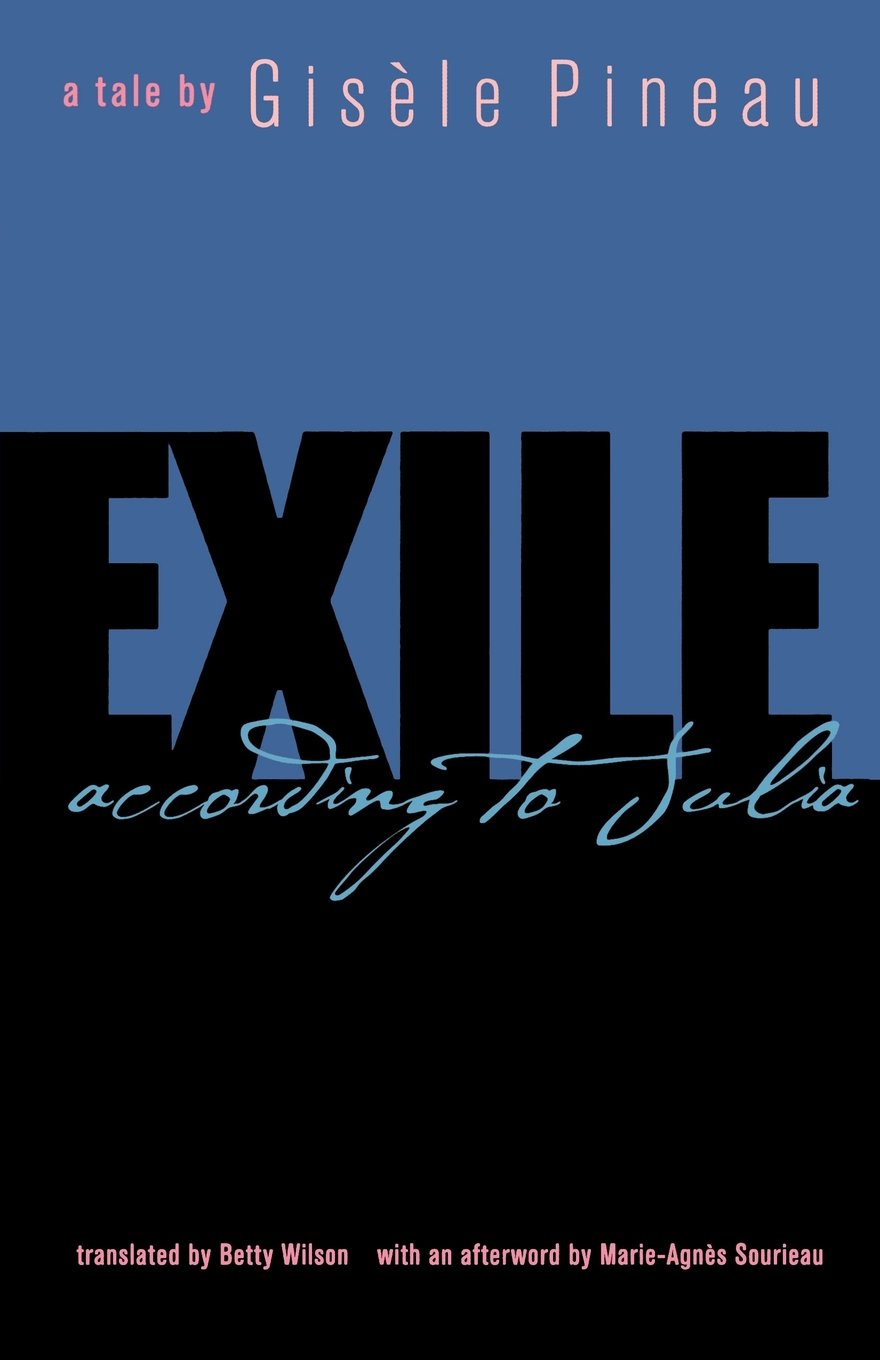
Wilson’s works include the novels Juletane, by the late Guadeloupean writer Myriam Warner-Vieyra (Heinemann, 1987); Exile according to Julia (L’Exil selon Julia) by French-Caribbean author Gisèle Pineau (CARAF, University of Virginia Press, 2003); and Aunt Résia and the Spirits and Other Stories - the first collection of short fiction in English by the acclaimed Haitian writer Yanick Lahens (CARAF, 2010).

When The Caribbean Writer journal devoted a special bilingual issue to “Ayiti/Haiti” in 2011, Wilson translated Raymond Mair’s poem "Haiti 200" for the volume. This followed several earlier publications, such as the translation of poems by Francophone Caribbean writers from Guadeloupe, Haiti, and Martinique, for a special issue of The Literary Review in 1992.

Wilson is a former head of the Department of French at the University of the West Indies, Mona, Jamaica. Now retired, she taught French language and literature as well as translation at UWI’s Department of Modern Languages and Literatures. She was also an adjunct lecturer in the Department of Literatures in English for five years, in charge of the graduate course “Women, Gender and Fiction”.

With her sister, the author Pam Mordecai, Wilson edited Her True-True Name (Heinemann, 1989), the first anthology of writing by Caribbean women. In addition, she served, for many years, as a member of the French Examining Committee of the Caribbean Examination Council, including being Chief Examiner for French at both the secondary and advanced levels.

Juletane, by Myriam Warner-Vieyra,
translated by Betty Wilson.
Wilson lives in Jamaica, where she remains active in supporting Caribbean literature. Her translation of 19 poems by the Cuban poet Dulce Maria Loynaz, with colleague Ileana Sanz, is awaiting publication, and she continues to work on Warner-Vieyra's short stories, Femmes échouées, and on poems by Mauritian poet Édouard Maunick. The following interview was conducted by email.

SWAN: When did you first become interested in languages, and how / where did you learn French, Creole, and Spanish?

WILSON: I've always loved languages. I started learning French and Spanish in high school. I am bi-lingual in Jamaican Standard English and Jamaican Creole but, unfortunately, I do not speak French Creole fluently. I was blessed to have great language teachers, and literature and languages have always been my favourite subjects.

SWAN: When did you start translating, and why?

WILSON: I did Latin in secondary school for seven years. It was taught very traditionally, and we always had to translate, which I liked. I enjoyed working out the puzzles and getting the message just right. My first published translation was the novella Juletane (Heinemann). At the time I was working for Heinemann Publishers in Jamaica and they found out I was fluent in French. They asked me if I would consider translating the book which they wished to publish. I found I really enjoyed the project. Two years later I was asked to do translations of poems by Edouard Maunick from Mauritius for the literary journal Callaloo. I had said I would never translate poetry.  It was much more challenging, but I found it very satisfying.

SWAN: How important is translation to Caribbean and world literature, especially now?

WILSON: Very important. Otherwise most people would only have a window into their own world and not be able to experience other cultures through great texts like War and Peace, Don Quixote, Senghor's poetry, Wide Sargasso Sea or A House for Mr. Biswas. I have had good feedback from friends who do not read French about the importance to them of my translations. It is especially important now for us to appreciate one another's cultures and world view.

SWAN: What can writers and the publishing industry do to support and promote translation?

A novel by Gisèle Pineau,
translated by Betty Wilson.
WILSON: For starters, the publishing industry could pay literary translators more appropriately; right now, it is a labour of love. "Professional" translators generally won't touch literary assignments. Writers could recommend books they have read in translation or in the original to their publishers for translation and publishing and seek avenues to have their own works translated.

SWAN: What is your opinion on the state of language teaching in the Caribbean?

WILSON: Language teaching has come a long way though we are still far behind Scandinavian countries and regions like Africa and India where English is not the first language. Most French teachers in the Caribbean are pedagogically trained, but more language teachers need to be trained. The Department of Modern Languages at UWI now offers several languages, but the departments of Education have largely not kept pace in terms of offering professional training in methodologies. In some countries active language teachers' associations - like JAFT (French) in Jamaica - attempt to fill the gap with workshops and seminars.

SWAN: How can people in the literary sphere help to bridge the linguistic "divides" in the region?

WILSON: Departments of literature (in English) could offer more texts in translation in their course offerings. Public readings could also be encouraged, as well as interviews with writers. Films like Sugarcane Alley, based on the Martinican novel by Joseph Zobel (La rue Cases-Nègres) or films like Strawberry and Chocolate (Senel Paz, Cuba) or Like Water for Chocolate (Laura Esquivel, Mexico), as well as "foreign" film festivals have done a lot to promote the literatures of other countries. Literary festivals like Calabash in Jamaica have also introduced and promoted writers who do not write in English.

This is the first in a planned series of translator profiles, in association with The Caribbean Translation Project (Twitter: @CaribTranslate), an initiative to promote the translation of literature from and about the Caribbean.

August is Women in Translation Month, a programme launched in 2014 by blogger Meytal Radzinski. #WITMonth

Saturday, 1 August 2020

SWAN’S SUMMER 'STAYCATION' SELECTIONS: 3 BOOKS

Reading is, of course, a way to travel, so here are our picks for memorable journeys even as the Covid-19 pandemic keeps most of us physically at home.

SAILING FROM STRIFE

The Belle Créole contains all the literary ingredients for which Maryse Condé is acclaimed: a gripping narrative, troubled characters, lavish descriptions, and a slow, simmering political backstory, set in the Caribbean.

The Guadeloupean author, who won the New Academy Prize (or alternative Nobel) in Literature in 2018, delivers a tale marked by tumult, love and desperation, skilfully translated from the French and Creole by Nicole Simek. The work, Condé’s 12th of 16 novels, starts with the “spectacular” acquittal of 22-year-old Dieudonné Sabrina, a gardener who is accused of murdering his employer - and lover - Loraine, a wealthy white woman descended from plantation owners, a “békée”.

Readers gain insight into Dieudonné’s past through a series of flashbacks from different points of view; we see the accused wretchedly wandering the city of Port-Mahault and finding sanctuary in a decrepit sailboat, La Belle Créole, while his homeland experiences strikes, violence and social disintegration. Condé makes us feel the “suffocating” heat of the city, an “inferno” that portends “further abominations”, such as “furious rains” and hurricanes. In contrast, there's the compelling beauty of the sea, although it, too, can be treacherous, as we see when Dieudonné sails away.

Apart from the main character and his “crime, the story is a portrait of an island struggling with the legacies of colonization and inequality, while facing a future where the only certainty might be climate change. Nothing is clear-cut - not relationships, motivations, politics, or personalities. As Dawn Fulton writes in the afterword, the figures that Condé creates in her novels are “famously not heroic, yet they unfailingly speak to us, draw us in, incite our compassion, frustration, fear, and empathy.” This book will leave some dissatisfied because of the characters’ “contradictions and incongruities”, but in the end, it’s well worth the read. (University of Virginia Press)

THE CONFOUNDING ISLAND

Add caption

“There are few places more puzzling than Jamaica” states the jacket flap of Orlando Patterson’s The Confounding Island: Jamaica and the Postcolonial Predicament.

Over the next 346 pages, the Harvard University sociologist attempts to explain the puzzle: why an island with more churches per square mile than any other country can also have one of the highest homicide rates in the world; how a place that produces numerous stars in the arts and sports spheres still struggles with an “anaemic” economy and fragile infrastructures. And so on.

What, then, are the answers to this long-lasting enigma? Patterson investigates the history and culture of his homeland and offers pertinent explanations for what drives Jamaica and its people. In doing so, he reveals that the island is not so mystifying after all.

Many former British colonies are grappling with similar issues of colonial heritage, inequity, and globalization; but Jamaica’s “hypervisibility” (a word everyone likes to throw around at the moment) makes for a special case, and the island’s history naturally explains its present. From Spain’s’ “genocidal destruction of the once-abundant indigenous Taino population” to the brutality of British plantation slavery, Jamaica has a past that is “drenched in blood, like no other place on earth”, Patterson writes.

Some people will disagree with his assessment, and the book may not be everyone’s idea of “summer reading”, but it is written in an accessible, engaging style, with flashes of Patterson’s acerbic wit. Each chapter (except for the final one) poses a question. Why Do Policies to Help the Poor So Often Fail? Why Does Globalization Not Produce Cultural Homogenization? And so on. The responses are based on extensive research and also on the writer’s personal policy experiences. This is a must-read for anyone interested in postcolonial history… and in why poor children can run, sing or write their way to international renown. (The Belknap Press of Harvard University Press)

HAIR BRINGS YOU THERE

That Hair, by Djaimilia Pereira de Almeida, takes readers to different continents - travelling by hair. Okay, enough with the puns.

Described by its publisher as an “autobiographically inspired tragicomedy”, the book is a coming-of-age story seen from the perspective of Mila, a biracial character growing up in Lisbon, the daughter of a black Angolan mother and white Portuguese father.

The exploration of her “curly hair” is a quest for identity that “intersects with the story of at least two countries and, by extension, the indirect story of the relations among several continents: a geopolitics”, as Mila herself puts it.

The main themes relate to belonging, colonialism, migration, feminism, and the issues that arise from eternally being considered an outsider – even in one’s own land. Translated by Eric M. B. Becker, the writing is rich and evocative of place, past and present, and the book is a worthy addition to our reading list, no matter the season. (Tin House)

Follow SWAN on Twitter: @mckenzie_ale.