Friday, 28 February 2014

BOOK BY FORMER RWANDAN REFUGEE OUT IN FRANCE

PARIS – In 1994 the world watched horrified as news of widespread massacres emerged from Rwanda. Now, nearly 20 years later, comes a poignant book in French that gives a personal account of the genocide and the effects on those who became refugees.

The front cover of Les enfants du Rwanda
Les enfants du Rwanda (The Children of Rwanda), published this month in France by Gaïa Editions, is a painful book to read, but a necessary testimony of what happened in the east-central African country. Its author Angelique Umugwaneza was 13 when she witnessed some of the massacres in which an estimated 800,000 people were killed in 100 days, and she said that as a survivor, she needed  to speak out.

Most of those murdered were Tutsi, with the Hutu as main perpetrators, and what makes this book unusual and controversial for some is that Umugwaneza is Hutu. She shows that everyone suffered in the bloodletting: Tutsi, Hutu and the Twa - a marginalized community that has not received the same level of international attention. But she has been criticized by at least one reviewer for not sticking to what she calls the “official story” that only members of one ethnic group were killed.

“I worry about being accused of not giving the full story of the genocide,” she said in an interview. “Some people who have seen the Tutsi being slaughtered have not seen the killing of the Hutu.”

The book was first published in Danish, as Denmark accorded political asylum to Umugwaneza and her sister in 2001, and it’s co-authored by Peder Fuglsang, a Danish academician who specializes in the history of developing countries. Fuglsang said his role was to provide the historical context for the very personal story.

The book begins with Umugwaneza’s almost idyllic childhood, before the genocide. She lived in a community where Hutu and Tutsi inter-married, went to the same church and sent their children to the same schools. One of her father’s best friends was a Tutsi named Mudenge. In the murderous madness of April 1994, Mudenge was “tortured and killed in the worst of fashions”, she writes.

Umugwaneza gives the now widely known background to the genocide but from the point of view of her younger self. She recalls the moment when her father turned on the family transistor to listen to the news on April 7, 1994, but could only hear “chants de complainte” (songs of mourning). Later, he found out from Mudenge that President Juvénal Habyarimana had been killed when his plane was shot down as he was returning from a peace conference in Tanzania. The president of Burundi (and all other passengers) also died in the attack. Both presidents were Hutu.

From the first part of Les enfants du Rwanda, one could get the impression that the downing of the plane triggered fear among Hutus, who felt they had to kill to avoid being killed themselves, and that the massacres were not planned. But official reports, and a history section at the end of the book, indicate that there had been schemes to exterminate the minority Tutsi people, with militants stockpiling weapons before April.

Angelique Umugwaneza (photo: SWAN)
The young Umugwaneza would not have known this, however, and so the atrocities are seen through a child’s eyes. The violence did not spare young people: Tutsi children were murdered while some of their Hutu schoolmates had to watch the slaughter. Children of mixed Tutsi-Hutu parentage were also hunted down.

“What happened to the children of Rwanda during this time was horrific,” Umugwaneza writes.

The genocide stopped with the victory of the Rwandese Patriotic Front (Tutsi), who formed a new government, but Hutus were now the ones fleeing. Many were killed in revenge attacks. Umugwaneza and her family became part of the exodus from Rwanda, and the bulk of the book deals with her experiences. For seven years, she lived as a refugee, moving from camp to camp, living in the forest and seeing unimaginable scenes.

She lost her mother and an older brother as they tried to find refuge in Zaire and then the Central African Rupublic. Her father had stayed in Rwanda as he had been called back to a distant job before the exodus, and a younger brother was eventually able to return, but Umugwaneza has not been back since 1994.

“I’ve traveled to the border, and I could look in but I did not go in,” she said during a trip to Paris to launch her book. “It used to be my country, but it’s not anymore.”

She said that she began writing just two weeks after she arrived in Denmark. “Being in a place where I didn’t have to live in fear for the first time in years gave me the energy to write,” she said. “But I had to ask myself: who was I writing for?”

She says she is writing for those who can’t, including a boy who attached himself to her family and who had to be left behind in the pitilessness of the refugee march. With the book now in French and set for a wider readership, she is also sending a message to those who would deny refugees a safe place because of politics and self-interest.

“I think being a refugee is a very nasty thing,” she said. “You hope and hope, and then you start giving up. You stop hoping. But situations can change. It has changed for me.”

After launching the book in Paris, she was scheduled to fly to the Central African Republic where she is working with a non-govermental organization to help refugees. An estimated one million people have fled their homes in the country, which is torn by inter-communal violence, like Rwanda 20 years ago. - A.M.

Monday, 10 February 2014

FRENCH-NIGERIAN SOPRANO SWEEPS OPERA CONTEST

The French-Nigerian soprano Omo Bello was a triple winner in the prestigious Paris Opera Competition held recently in the French capital.

Omo Bello
Bello won the first prize and, in the women’s category, the French Opera of the 19th Century award and the Public Prize at the contest, which was launched to “discover new talents” and “to support and guide” the careers of young singers, according to the organizers.

These are just some of the latest honours for the Lagos-born singer. Bello, 29 years old and based in Paris, first caused opera audiences to take notice when she won the top prize in the 2010 Luciano Pavarotti Giovani competition in Vercelli, Italy.

She followed up that success with first place in the Anselmo Colzani international singing competition in Budrio, Italy, in 2011, and in France received the Cziffra Foundation grand prize for exceptionally talented young musicians.

Earlier this month, she also travelled to Aix-en-Provence for the finals of the French annual “Victoires de la musique classique” competition in which she had been nominated in the  "Révélation lyrique de l'année" (revelation of the year) category. She didn’t win in this event, but ended up giving a striking performance.

“These past weeks have undoubtedly been the most eventful period of my career,” she told SWAN. “I was home for a few days after making a debut in the role of Donna Anna (from Mozart’s Don Giovanni) in mid-November, when I got a call from my agent telling me I was nominated for the 2014 Victoires de la Musique.”

Bello receiving one of her three prizes.
It was in late January, a few days before the "Victoires" awards ceremony, that she took part in the Paris Opera Competition, performing in front of top representatives in the field and an audience of music lovers.

“In general, I’m not a fan of singing competitions, but I was very interested in this one when I realized that the jury was made up of well-known opera directors from Glyndebourne, Geneva, Zurich, Brussels, Lyon, Bordeaux, Berlin etc.,” she said.

“I decided to go for it, as this was a unique occasion to have so many of the opera-hiring professionals all at once. It was extremely gratifying to walk away with not one, but the three top prizes.”

Bello added that the French opera prize was her “pride and joy” because of her Nigerian origins. “This proves that I’m able to master the French lyric repertoire and its subtleties,” she said.

That mastery has been due to years of hard work, as her long-time teacher Jorge Chaminé attests. “She is talented, totally dedicated to her craft and pushes herself to achieve the maximum. I believe she will be one of the great singers of her generation,” said Chaminé, a renowned Spanish-Portuguese baritone who lives in France.

Johan Choi
The Paris Opera Competition, created in 2010 by financier and opera lover Paul Vernes and based on a concept by artistic director Xavier le Maréchal, also highlighted other talents this year. American baritone Jamez McCorkle won the “Young Hope” prize; South Korean singer Johan Choi gained the public’s prize and the 19th-century French Opera prize in the male category; and Russian mezzo soprano Maria Kataeva took home the CFPL prize - from the French centre for the promotion of opera.

For an earlier SWAN profile of Omo Bello, see: 
http://southernworldartsnews.blogspot.fr/2011/11/nigerian-soprano-soars-in-europe.html


Other winners: Maria Kataeva (top) and Jamez McCorkle.
Photos by E. Mercier, courtesy of the Paris Opera Competition.

Wednesday, 29 January 2014

PARIS ARENA HIGHLIGHTS GLOBAL 'POWER' OF THE ARTS

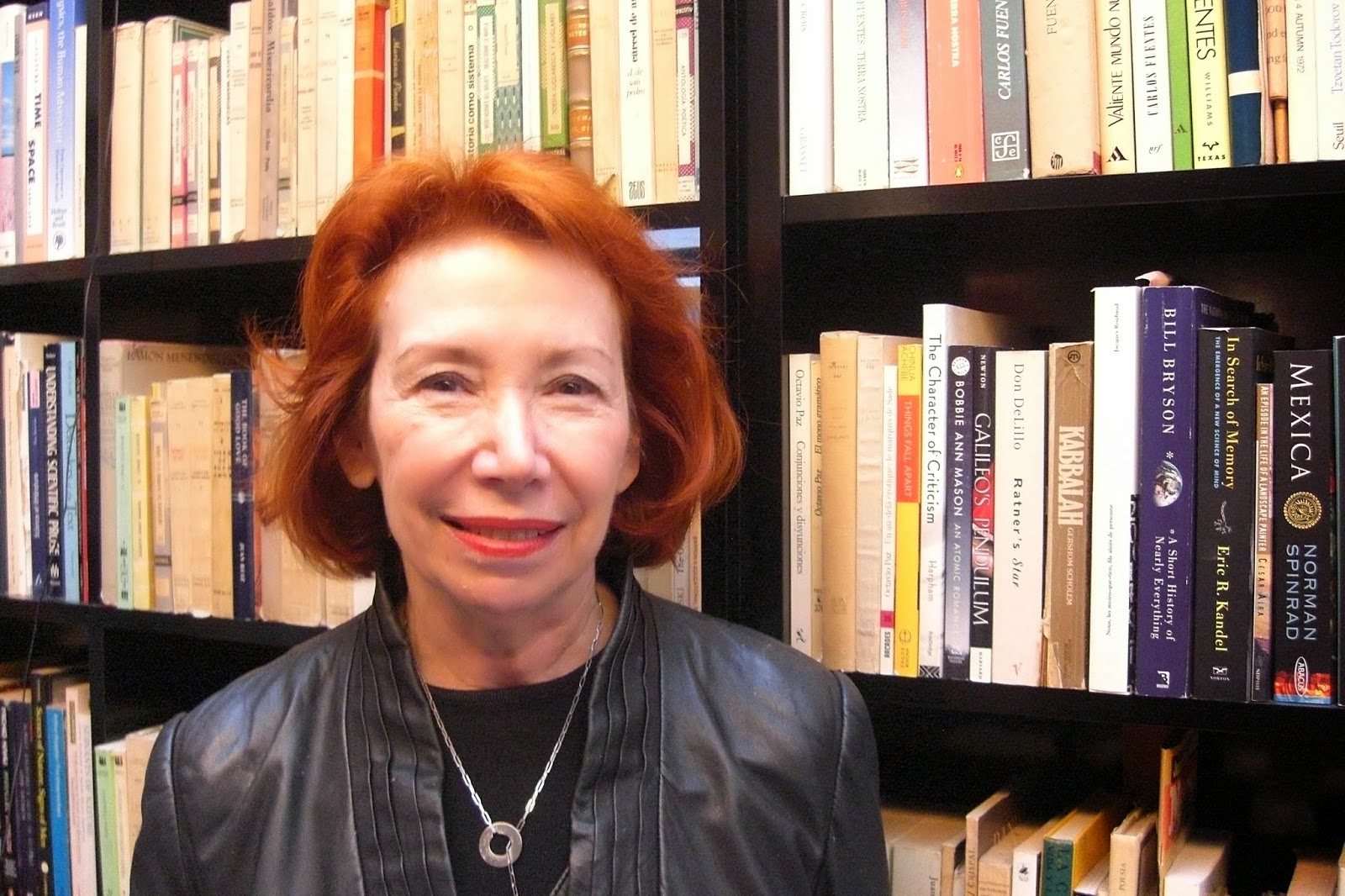
For Margery Arent Safir, the arts can play an important role in promoting respect for human rights and in bringing people together, and this belief has led her to create an unusual cultural “space”.

Arent Safir (r) with Iranian artist Shirin Neshat
Arent Safir is the founder and director of the Arts Arena, a non-profit organization based in Paris, France, that invites artists from all over the world to speak about their work and share their experiences, with audiences participating for free.

“I really believe that the arts can change people’s lives and people’s thinking,” Arent Safir told SWAN in an interview. “You can be sitting at a concert next to an enemy of your country, but you’re both listening to music, and you’re not fighting – you’re sharing the same music, both going through some kind of transformation."

After years in the academic sphere as a professor of comparative literature, Arent Safir knows firsthand the ability of a novel, for instance, to “communicate things than can alter mindsets”. She founded the Arts Arena in 2007 to involve artists and the public in open discussions with a view to sharing her core beliefs.

“Maybe I’m among the last of the true believers in the power of the arts to do something in this world that has become so radically commercialized, so oriented towards money and getting ahead, ‘advancement’ with a dog-eat-dog mentality,” she told SWAN.  “The arts create spaces where you step back from all that for a certain amount of time, and you get in touch with other values.”

Initially housed at the American University of Paris, where Arent Safir taught from 1987 to 2013, the Arts Arena became independent in September with expanded partnerships that include Columbia Global Centers | Europe.

The Centers are an initiative by New York’s Columbia University to expand its global “mission”, and the outlook fits with the Arena’s objectives, Arent Safir said.  Other Arts Arena partners include the Yale School of Art, Curtis Institute of Music, and Yale School of Music.

Brochures for the Iranian Arts Now festival
The idea of bringing people together is behind many of the Arena’s events. Arent Safir cites the 2012 Iranian Arts Now Festival that she organized in Paris as an example of how a cultural happening got people to discuss their differences.

“The artists from inside Iran did not like and did not trust the Iranian artists living outside,” she recalled. “But over a week of intense artistic activity and then a month-long art show, they had to come together. They ended up talking this all out, and you could see the change. I think this has value.”

In 2014, the Arena is continuing that tradition with a stimulating line-up of events in France. On Feb. 21, the director emeritus of the New York Film Festival, Richard Peña, will give a lecture on the early independent African-American filmmakers in the United States, who created movies between 1915 and 1950 primarily for black audiences.

Their work included musicals, westerns, social dramas and gangster films, few of which have widely been seen. Peña will screen the 1941 film “The Blood of Jesus” by Spencer Williams (the prints of this “lost film” were rediscovered in the 1980s in a Texas warehouse), and he will also conduct a question-and-answer session with the audience.

Later, in May, the Arts Arena will also participate in the United Nations Association Film Festival, and its Travelling Film Festival, both of which celebrate the power of films and videos dealing with human rights, the environment, globalization, and war and peace, according to the organization.

Arent Safir in her Paris study
“This is something that I really want to emphasize about the work of the Arts Arena – our interest in artists who take strong moral positions,” Arent Safir said. “I’m a believer in activist arts and cultural diplomacy.”

Everyone invited to speak at the Arts Arena has done so for free, she said. The organization gets funding from various patrons as well as its membership program and is committed to offering its events without charge, but costs have grown over the years. The challenge is to keep donors accepting that their contributions help others while also providing something for themselves; the Arts Arena does this by hosting some member-only events.

“I feel that nobody should be turned away from a cultural event because of lack of resources,” Arent Safir told SWAN. “We have to break down the barriers between the arts and the real world.” - A.M.

Tuesday, 14 January 2014

DAVOS HIGH-FLYERS TO VIEW ‘LONG WALK TO FREEDOM’

Nelson Mandela’s life story is “simply too big, too complex and too important” to be captured by a single movie, according to one critic, but this hasn’t stopped audiences from going to see Mandela: Long Walk to Freedom.

The movie poster in French
The film has been playing in several countries since its release shortly before Mandela’s death on Dec. 5, and most viewers have given it a positive rating, singling out the London-born actor Idris Elba for his commanding performance as the beloved South African icon who forgave his captors after 27 years in prison and who worked to unify his country.

A different set of viewers will watch the film on Jan. 24, however, when Long Walk to Freedom is screened at the Annual Meeting of the World Economic Forum in Davos, Switzerland. The Forum brings together leaders from the business, political and academic spheres to “shape global, regional and industry agendas”, but the meeting has often been criticized for being elitist and out of touch.

According to organizers, the screening of the movie is a continuation of the initiative started in 2006 by Prof. Klaus Schwab, founder and executive chairman of the World Economic Forum, “to use the medium of motion pictures to highlight topical global issues”.

In a statement, Schwab said: "Everybody who sees Anant Singh's film, Mandela: Long Walk to Freedom, is moved by the trajectory of this most outstanding personality of the past decades, who was such a great friend of the Forum. This film reminds us to incorporate the spirit of Nelson Mandela into our mission and all our activities."

Mandela addressed Davos participants in 1991, a year after he was released from prison and three years before he became South Africa’s president.

Idris Elba as Mandela
Producer Anant Singh has been invited to present the film as part of a tribute to Mandela, and he will provide “insights” to the production, which is based on Mandela's autobiography of the same name.

Singh said he hoped that the film would inspire the delegates “as Madiba did in his first address at the Annual Meeting".

The delegates this year include Microsoft founder Bill Gates, American actress Goldie Hawn, Iranian filmmaker Shirin Neshat and controversial French businessman Christophe de Margerie, the chairman and CEO of  oil giant Total.

Away from Davos, the biopic received a boost earlier this week when the song Ordinary Love, written by the Irish band U2, won a Golden Globe Award in the United States for Best Original Song - Motion Picture. Lead singer Bono said the win was “personal” for the band because they had written a “love song” to a man who “refused to hate”. 

Sunday, 29 December 2013

IVORIAN PRODUCER POPS UNIFYING BEAT FOR NEW YEAR

If Djei Gogo has his way, everyone will begin the New Year on an upbeat note. And not only upbeat, but dancing to a certain rhythm - a unifying, “Majestic Riddim”.

This is the name of an original music project that Djei has spearheaded. The Ivorian-born, Czech Republic-based producer sent the same reggae melody to performers around the world and asked them to create songs based on his tune, and he was surprised at the positive reaction he got.

Djei Gogo
Thirty-four artists from three continents agreed to provide vocals, resulting in 29 versions of Djei’s “Majestic Riddim”. The contributors include such big names as Jamaican singers Half Pint and Perfect Giddimani, and young talents that are being introduced to an international audience for the first time.

“I didn’t expect such a huge response,” Djei told SWAN. “I was planning to use only a few songs but as I listened and realized how good they were, I thought: why not use all of them?”

Djei says that “Majestic Riddim” has a “conscious vibe” and is meant to build bridges. The project unites artists from a host of countries, including France, Nigeria, the Czech Republic, Hungary, Kenya, Germany, Senegal and Spain – all singing to a similar beat.

Djei, a professional bass player who has worked as a producer for 15 years, mixed all the contributions at his Flavour Production company in Prague. As each song has the same instrumental introduction, it does take the listener some time to get accustomed to more than two dozen songs all with the same melody. But then one focuses on the lyrics, which are all different, and which remind us, as Djei says, that music has no barriers and no frontiers.

The performers sing or rap in their own language, such as English, French and German, and the message is about love, justice, self-reliance and new beginnings.

Sista Carmen, one of the few women artists on the compilation, sings in Spanish that she wants “un mundo perfecto” (a perfect world) while Superior urges: People be smart / stay clean at heart / we have to restart / everybody take part. A pefect rhyme and riddim for 2014?

Majestic Riddim is available through digital download on iTunes, Amazon, and BandCamp.

Friday, 6 December 2013

GONE: NELSON MANDELA, A 'GIANT' AMONG HUMANS


As people around the world mourned the passing of former South African President Nelson Mandela, who died on Thursday night, the words of UNESCO’s Director-General Irina Bokova struck a particular chord.

“Nelson Mandela was truly a giant among men,” Bokova said. “He not only changed South Africa’s history, he changed the world and made it a better place. He taught us all a lesson on the power of peace and reconciliation; the importance of forgiveness and respect for the dignity of each and every human being.”

The head of the United Nations’ cultural agency continued: “The greatest tribute we can pay him, is to carry on his message of hope and to continue his fierce defense of the values he stood for.”

Saturday, 30 November 2013

PAKISTANI ARTIST PULLS FANS INTO A 'PIXELOUS' WORLD

By Zofeen T. Ebrahim

"I have nothing against paint or the brush, but I will only use it if and when I have a reason to," says Rashid Rana, one of Pakistan’s most celebrated artists, who utilizes thousands of images to create his works.

"Right now I am quite happy with the technique I am using," he adds.

Rashid Rana's "Desperately Seeking Paradise", a
stainless steel structure with images of Lahore.
Acclaimed both in Pakistan and abroad, Rana gave an exclusive walking tour of his exhibition “Labyrinth of Reflections: the art of Rashid Rana 1992 – 2012” at the Mohatta Palace Museum, in Karachi, earlier this month - following the launch of a book of his works, by the same name.

Oddly, the Palace's majestic exterior in pink and yellow stone and the opulent interior with tiled floors made perfect sense as a place to hold Rana's exhibits, which reflect, by his own admission, the "paradoxes we all live with". He says that his works also "document my own contradictions" and "those that are outside".

Rana's seminal mid-career retrospective, which includes more than 60 works done over a period of two decades and which forms the museum's 17th exhibition, has been a runaway success. For Rana himself, seeing all of his work "under one roof" for the very first time has made him take stock of the momentous journey he has undertaken.

He is happy with what he terms the "micro-macro device" whereby a huge, single software-generated image is created by using thousands of “pixelated” images. These are not all photographs taken by him and he says unabashedly that some "are borrowed from other sources, including the Net" to make the exhibits he terms "original".

For example, on closer inspection, the image of a huge colonial building in the eastern city of Lahore, in Punjab province (to which Rana belongs), is composed of thousands of pointillist photographs.

Rana's "Red Carpet", with images of blood and flesh.
In similar manner, the images of the huge red Persian carpets, which he confesses became an instant "commercial success", comprise miniature images of blood and flesh.

"The carpet is the exotic orient and the small thumbnail images inside represent the violence we see around us," he explains. "There is a streak in us that loves sex and violence."

As one goes from one image to the next, it seems clear that Rana is consumed by the theme of "duality" that reflects the "polarities of our times".  Using this theme has helped the "ideas" brewing in his mind to take shape.

"I keep re-inventing so never tire of it, at least not yet," he says. Thus conventional paint and brush seem to have been swept out of his life for now.

While one finds Rana enjoying the overwhelming attention he is getting across the globe (he has said on various occasions: "I don't want my work to be seen just by an audience of twenty"), he emphasizes at the same time that "contemporary art should engage with people not only within the art circle” but "outside the creative world". He would be happiest to see his work being shown in public places - "like shopping malls" - for all to enjoy. 
  
Put up nine months ago, in February, the exhibition received new impetus this week when the museum launched a heavy tome, which has been described as “flawless” by Naazish Ataullah, former principal of Lahore's National College of Arts, of which Rana is a graduate. The book gives a veritable "insight into the artist's creative journey" and includes six essays by heavyweights in the academic world such as Ataullah herself.   
    
Rana - a "rock star" artist
Fondly terming him a "rock star in the US", Sherry Rehman, Pakistan's former ambassador to the United States, and a trustee of the Mohatta who presided over the book launch, said Rana definitely did not fit the label of "a cookie-cutter artist".

By not catering to "drawing room art", Rehman said Rana's art had the "power to challenge dogma". His art was challenging, she said, because "he refuses to be overly worrying of what people will think". That is a test of great art -- "it moves and transforms you," she added.

Zofeen T. Ebrahim is a freelance journalist based in Karachi.  

Monday, 18 November 2013

CREATIVE SECTORS BOOST ECONOMY, BUT LACK SUPPORT

The global trade of creative goods and services totaled a record US$624 billion in 2011 and more than doubled from 2002 to 2011, according to a special edition of the United Nations Creative Economy Report which was launched in Paris, France, this month.

Life is art: an artist at work in a shop window. © SWAN.
Yet, many governments are still not doing enough to support culture and to encourage creativity and innovation. While culture ministers have to keep begging for a greater slice of the budget pie around the world, those who control the purse strings still need convincing.

“In most cases, culture has been relegated to inferior status in trade discourse and economic prescriptions within the world’s banking and financial sectors and ministries of finance,” says Jamaica’s Minister of Youth and Culture, Lisa Hanna.

“This is in spite of the data that show that culture and creative industries are among the fastest growing sectors in the world, even in the face of a global recession,” Hanna said in a speech at the UN General Assembly earlier this year. She reiterated the points last week before the launch of the report at the United Nations cultural agency UNESCO.

Apart from the financial aspect, the report stresses that “creativity and culture also have a significant non-monetary value that contributes to inclusive social development, to dialogue and understanding between peoples”.

The creative economy gives rise to job creation and export earnings for countries, the report shows, with the sector including new media, performing arts, audiovisual products, design, publishing and the visual arts.

A young man learns film-making in Guatemala.
© UNESCO/International Fund for Cultural Diversity.
Between 2002 and 2011, developing countries experienced an average of 12.1 percent annual growth in exports of creative goods, but there is still an “urgent need" to find new development pathways that can encourage creativity and innovation, the report says. The aim is to achieve sustainable growth that is both inclusive and equitable, it adds.

Many experts would like to see culture become a part of the next UN programme when the current Millennium Development Goals (MDGs) reach their term in 2015, and they’re making their voices increasingly heard.

We want culture to be a definite part of the post-2015 agenda which will be decided next year, and we're ready to negotiate our role," said Francesco Bandarin, UNESCO’s Assistant-Director General for Culture. 

He told SWAN that culture isn't just about "going to a concert or the cinema after work" but it includes "valuing local musical traditions" such as the "immensely rich traditions in Africa", and setting up enterprises that generate employment in the music industry, for instance.

Hanna, the Jamaican minister, said there is evidence that “culture provides a platform which transcends all boundaries … and unites all peoples in our collective engagement to secure equals rights and justice, peace and security, recognition and acceptance for ordinary men and women of the world.”

Music spices up the Caribbean economy. © SWAN
But she said that in spite of her nation’s “creative imagination and global impact”, Jamaica had not been able to “reap the full rewards of its cultural prowess”.

“This is largely a consequence of global economic and industrial policies that have not taken into account the role of culture in development,” Hanna said.

The report aims to change attitudes by the breadth of its coverage. It highlights examples of how the creative economy is diverse and innovative, “enhancing lives and livelihoods” at the local level in developing countries.

In Argentina, for instance, the cultural and creative industries employ some 300,000 people and represent 3.5 percent of the country’s GDP, while in Morocco, publishing and printing employ 1.8 per cent of the workforce, with a turnover of more than US$370 million, the report says.

In Bangkok, Thailand, there are more than 20,000 businesses in the fashion industry alone, while across the region, young people are earning a living as small-scale designers and dressmakers.

In Zimbabwe, the Pamberi Book Trust Café is an “innovative example of the arts being made into a sustainable business”, the report says. The partnership between an independent cultural non-governmental organization and a commercial entity has given rise to projects such as FLAME (female literary, arts and music enterprise) that bring women artists into Zimbabwean mainstream arts.

These pioneering programmes help to boost the participation of creative industry professionals in both local and global markets, the report states.

(For more information: www.creativeeconomyreport2013.com)

Wednesday, 23 October 2013

JAMAICAN ARTIST SOARS THROUGH ‘MAGICAL PORTAL’

The characters in Bernard Hoyes’ paintings do get around. Fresh from “dancing off the canvas” onto the stage in the United States, the iconic figures are once again in the spotlight, but this time in the historical centre of Florence, Italy.

Bernard Hoyes with his artwork. (Photo by A. McKenzie)
The city’s Gallery Mentana is displaying the works by the Jamaican-born, U.S.-based Hoyes in two shows: “International Independence”, which opened last month, and “Light and Matter”, which begins Nov. 2.

The shows focus on contemporary visual arts, including photography, mixed media and sculpture, by artists from around the world. Hoyes, whose works are instantly recognizable, is representing a distinct cultural aspect of the Caribbean.

“It’s an honor to be invited to Italy,” he says. “It fills my heart to know that Jamaican imagery, rooted in traditional African perspective, is embraced around the world.

“As a young boy growing up on the island, I never imagined that art would open so many doors for me.  But it’s proved to be a magical portal and a gateway to adventure,” he adds.

In Italy, Hoyes is exhibiting from his “Ribbons Series” and “Revival” collections, both known for their tapestry of colour and depictions of African-based spirituality. In fact, the first thing that one notices about Hoyes’ work is the artist’s bold use of colour, as swathes of red, yellow and green liven his canvases.

From canvas to stage
The second thing is the sense of movement; Hoyes’ subjects are usually dancing, swaying as they pray, beating drums or waving their arms in praise. So it’s little wonder they get to “travel around”.

Just months ago in California, his subjects made the leap from the canvas to the stage, when Hoyes produced "Seven Paintings", a seven-act play based on his artwork and celebrating the 50th anniversary of Jamaica’s independence from Britain.

With huge video projections of the paintings forming a backdrop, 40 performers told the story of a young woman born in the church who wants to be become a dancer but who finally comes to terms with her destiny, as a healer.

The performers included 12 dancers who seemed either to emerge from or to enter the seven paintings as the story unfolded to drumbeats from the Kabasa Drum Ensemble and music from a tambourine-shaking choir, The Tambourine Chorus.

Now, the characters have returned to the canvas in Italy, but their vibration and light are already being noticed. It’s all these elements – light, colour, movement and mysterious stories – that have gained Hoyes a dedicated following. Collectors of his work over the years include celebrities such as talk-show host Oprah Winfrey and singer Natalie Cole, but he’s expanding his reach beyond the United States and the Caribbean.

A scene from "Seven Paintings"
Besides Italy, Hoyes has exhibited in Germany and The Netherlands (“Dancing into the Light”), in addition to a well-documented trip he made to China where he produced a nine-foot-high granite sculpture of a bluefin tuna, with the aid of local craftsmen.

Most of his inspiration, however, comes from his childhood in Jamaica and especially his experiences in the Revival Church. There he was a front-pew witness to the worship by the robed and turbaned congregation, to the intense spiritualism and to the practice of public baptism. The dancing and the singing in the church left a lasting impression on Hoyes.

“My grandmother was a deacon in the church, and she raised me until I was eight,” he says. “She didn’t believe in formal education, so what I learned came mostly from her and the church.”

Born in Kingston and raised in a house behind the city’s General Penitentiary, Hoyes often went to buy bread at the prison bakery for his grandmother or did other odd jobs for her as she prepared for her religious duties. He didn’t attend a proper school until he went to live with his mother when he was eight years old.

“I was so far behind by then that I still had trouble learning numbers and the alphabet,” he recalls. By age 12, he wasn’t sure he wanted to continue with school, so his mother enrolled him in a cabinet-making course and he got exposed to carving and sculpture. During those years he met the famous artist Edna Manley, mother of the late Jamaican politician Michael Manley.

Artful redemption
“She challenged me to come to classes on Saturdays, and there I really developed an appreciation and skill for sculpture,” Hoyes says.

He thought his future lay in this direction in Jamaica, but when he was 15 years old, he suddenly received a passport and heard from his mother that he was going to live with his father in Brooklyn, New York. Up until then, Hoyes had never met his Dad or even seen a photo of him.

He discovered that he also had a brother and a sister in the United States, and he soon found himself at Thomas Jefferson High School, where “nobody noticed” that he couldn’t read. Hoyes’ father was a stern disciplinarian which meant he had to attend school, but luckily for him the school had a teacher who recognized his artistic talent.

This led to a scholarship to study with professional artists in Vermont one summer, and the participants were so impressed with his work that they invited him to continue his education there. He began attending Vermont Academy, an elite secondary school that offered very academic subjects and great sports, but no art.

“The teachers took me under their wing and refused to let me fail,” Hoyes says. “After I rebelled a little bit at the curriculum, they even started to let me do art after class instead of sports.”

An instructor came from another school to give the course, which some of Hoyes’ friends also joined, and “suddenly the academy had an art group,” he recalls.

Artwork by Bernard Hoyes
When Hoyes graduated, he decided to go west (to the California College of Arts and Crafts) although he barely had any money to support himself. He slept in a sleeping bag on the campus grounds until a janitor offered him a room.

“This was the Sixties so you could always get a sandwich, and you could hitchhike to wherever you wanted to go,” he says, with his hearty laugh.

After graduating from college, Hoyes says he “played around with being an artist” until he returned to Jamaica in 1978 and was shocked by what he saw. The country was going through a turbulent time, rife with political violence. One night police kicked in the door of the house where Hoyes was staying with his mother and sister, claiming that they looking for guns. When Hoyes complained, he received a rifle-butt blow to the head.

“That was sobering,” he says quietly. He returned to California, living homeless on Venice Beach, but he was more serious about his art. With the works he sold, he managed to buy a house in a better neighbourhood in Kingston for his mother.

His paintings began to increase in value, but things really took off in the late Eighties and early Nineties, when the artwork was chosen for the backdrop in some episodes of The Cosby Show and was also used in a storyline for A Different World. This exposure heightened his profile and then he got further help from a fairy godmother – in the form of Oprah Winfrey.

Hoyes' art hits the stage.
The talk-show host decided to buy some of his paintings for her collection, and her choice generated enormous interest in Hoyes’ work. But some unwelcome attention also came from the Internal Revenue Service (IRS) who thought it was strange that Hoyes suddenly went from a struggling artist to selling his work for big bucks. They audited him, and a significant amount of his new income had to be used to pay a tax lawyer and an accountant. To make things worse, that was also the year his mother died.

With his life being shaken up, Hoyes threw himself into his work after going to Jamaica for his mother’s burial service. His experiences enriched the art he was producing, and the sense of spiritualism, of reaching for a purpose, is evident in all his later works.

“What I try to do is travel the road, to spiritualism, nationalism, identity,” he says. “I want people to be a part of it. My art says Africa, Europe, Asia and that’s what the Caribbean is.” - A.M.

(Parts of the interview with Hoyes were previously published in Everybody's Magazine. Photos provided by the artist, unless specified. )

Follow SWAN on Twitter: @mckenzie_ale