Thursday, 28 June 2012

CALABASH LIT FEST GROWS TO NEW HEIGHTS

The backdrop of the Calabash Literary Festival
After a one-year break to take its bearings, Jamaica's Calabash International Literary Festival has returned bigger than ever.

Calabash - according to many of the writers, musicians and artists who took part in May - is a fiesta like no other. The combination of literature, music, visual arts and spoken word performances puts the festival in a category of its own.

When one stirs in the spectacular scenery of Jamaica’s southern coast, and the fashionable and welcoming audience, it’s easy to see why attending Calabash is an unforgettable experience. This year, to top things off, the three-day festival was part of the official celebration of Jamaica’s 50th anniversary of independence from Britain.

“Just the number of people listening to you as you read is amazing,” said American writer Victor LaValle, who entertained the audience with lively excerpts from his latest novel. “I’ve never been to any literary festival like this before.”

Victor LaValle
LaValle was one of the international stars at this year’s event, but the festival also played host to many renowned members of Jamaica’s literary diaspora. From the United States came a veritable posse, including famed writer and sociologist Orlando Patterson, innovative novelists Patricia Powell and Marcia Douglas, and the talented and personable poet Shara McCallum.

From Canada, the celebrated multi-genre writer Olive Senior read from her new novel Dancing Lessons, while novelist Garfield Ellis provided an earthy (some said "bawdy") taste of life abroad. From England, author and journalist Colin Grant amused his listeners with tales of trying to track down Bunny Wailer for his book about reggae’s most famous band, and first-time novelist Kerry Young cracked everyone up with her brilliant and energetic reading of Pao.

From her current journalism base in France, writer Alecia McKenzie (SWAN’s editor), returned home to read from her novel Sweetheart, which won the regional 2012 Commonwealth Book Prize.

Kwame Dawes and Justine Henzell
wave goodbye at Calabash's end.
"It was such a joy to bring overseas-based Jamaican writers home to join the celebration for Jamaica's 50th anniversary - the perfect way to expand the Calabash family,” said filmmaker and festival co-director Justine Henzell.

“Sometimes Jamaica's amazing literary talent can get overshadowed by our musical counterparts and this was a chance to shine the light on our wordsmiths," she added.

But as in previous years, music was also an integral part of Calabash 2012. Jamaican reggae icon Ibo Cooper jammed with other musicians on a run-through of 50 years of Jamaican music, while South African MC The Admiral was also on hand with rhythms pounding into the second night of the festival.

Earlier that day, The Admiral’s father – freedom fighter Ronnie Kasrils – had given a moving and inspiring talk about South Africa’s liberation struggle, an account that for many people was one of the highlights of the festival.

On the third and final day, another notable session was hosted by Jacqueline Bishop in which author-artists spoke about the inspiration and motivation for their different genres. Bishop, a university lecturer, writer and artist, brought together writer/painters Earl McKenzie and Ralph Thompson for a memorable exhibition and discussion.

Artist-writers at Calabash, with Bishop (second from right)
“If there was a year that I was glad to be invited to Calabash, it was this year,” Bishop told SWAN. “Some of my favorite people were there, so Calabash came to mean a reaffirmation of community for me. I was glad to celebrate Alecia McKenzie’s Commonwealth prize win for her book Sweetheart. I was delighted to hang out with other writers not on the program, such as Sharon Leach and Diana McCaulay, who, incidentally, won a Commonwealth regional prize this year as well, in the short story category." 

Bishop and other writers also took part in a boat ride organized by Jakes Hotel, the festival’s wonderful hosts; and seeing the extraordinary scenery of the protected areas around Black River will no doubt inspire poetry and art for years to come.

That boat trip, along with the welcome and farewell dinners, and just exchanging jokes with fellow writers (such as the incredibly chic 70-something Velma Pollard, and good-humoured Puerto Rican poet Loretta Collins Klobah) were the elements that made Calabash 2012 particularly special. Also heart-warming was the presence of friends who had come from near and far to support the participants.

University lecturer and writer Carolyn Cooper
Throughout it all, the sessions moved smoothly along, thanks to the composure and wit of renowned author and festival programmer Kwame Dawes, and also of  “don’t mess with me” scholar Carolyn Cooper, who marshaled the talent of the open-mic poets.

“Calabash lights a fire in your heart for the arts,” said New York-based Jamaican broadcaster Francine Chin, who covered the event. "I can't wait for the next one."

Saturday, 9 June 2012

STEPHEN MARLEY ON REVELATION 2 TOUR OF EUROPE

Stephen Marley
Reggae musician Stephen Marley has begun a nine-week Revelation Part 2 tour of Europe, with concerts in France, Switzerland, Germany, the Netherlands, Czech Republic, Hungary and other countries, according to his record company Ghetto Youths International.

Marley has built a reputation navigating between genres, but the Grammy Award-winning album Revelation Part 1: The Root of Life (Universal / Ghetto Youths, 2011) marks a return to his roots-reggae foundation.

A producer, singer-songwriter and instrumentalist, Marley is the second son of legendary reggae artist Bob Marley. He has produced music for his brothers Damian and Julian, among others. 

He now plans to release a follow-up to Revelation Part 1: The Root of Life, entitled Revelation Part 2: The Fruit of Life on Universal Records / Ghetto Youths International. Marley describes the new work as leaning more toward “an eclectic feel”.

The dates and venues for upcoming concerts include June 9, Perpignan, France at Ida y Vuelta; June 10, Bilbao, Spain at Kafe Anztokia; June 12, Madrid, Spain at Sala Arena; June 14, Lyon, France at CCO, June 16, Rouen, France at 106; July 1, Brussels, Belgium at Couleur Café; and July 5, Paris, France at La Cigale.

For information on other concerts: http://www.stephenmarleymusic.com/

Thursday, 31 May 2012

DUBTONIC KRU AIMS TO ENERGIZE THE WORLD

   
Reggae band Dubtonic Kru
The members of Dubtonic Kru make no apologies for their love of “roots” reggae. The Jamaica-based band say that this is the music they want to play, and they’re making a success of it, attracting fans around the world with danceable beats and positive lyrics that aim to uplift listeners.

Their style is in sharp contrast to that of certain dancehall stars, and they stand out because of it. The Kru’s versatility was rewarded last year when they were voted “Best New Band in the World” at the Global Battle of the Bands World Finals in Malaysia, Feb. 2011. After a fierce musical showdown that involved different genres and national finalists from many countries, the judges unanimously awarded Dubtonic Kru top honours. 

Dubtonic Kru in Jamaica
The band was founded by Jubba and Stone, a drum and bass duo, who have toured and recorded with artists such as Max Romeo, U-Roy, Burning Spear, The Mighty Diamonds, and Richie Spice. The other members are guitarist Jallanzo, keyboardist Luke Dixon and vocalist Kamau.

They have been giving concerts in various U.S. cities this year and will embark on the second leg of their tour in August. Last year they performed at several festivals in Europe to great enthusiasm. Their latest single “Murderer” - which urges an end to killings on the Caribbean island – has garnered glowing reviews, and they are now working on their fourth album.

Drummer and vocalist Jubba answered our questions about the band and their music.

SWAN: What is the inspiration behind the new single "Murderer"?
Jubba: The Inspiration comes from the current global situation. Right here in our country, we see violence being a plague to mankind.

SWAN: Are positive messages important to your music?
Jubba: Extremely

SWAN: What do you think of the lyrics and sound of dancehall music?
Kamau and Jallanzo on stage
Jubba: It would be unfair to generalize, as the music within itself is innocent; however, if I should describe this branch of music coming from its origin reggae, then I would say, its up-tempo beat does create a mood for dancing, hence people tend to gravitate easily. In terms of lyrical content, like every other genre (not limited only to dancehall), the pen or the mind behind the content of a song is responsible for the public's perception, especially given the popularity of the genre. It is evident that whether dealing with positive or negative issues, dancehall tends to deal with the issues more graphically, hence whatever topics are more popular will be the topics that take precedence. Or in other words, the genre will be stereotyped by these topics.

SWAN: Do you think there is a revival of "traditional" or roots reggae taking place?
Jubba: Certainly. However, I would not necessarily say traditional. Life is a cycle and so even through an evolutionary process, old things will sometimes take on new faces and also be presented through interpretations of the new representatives.

SWAN: When we were at Reggae Sun Ska in France last year, people seemed more interested in roots reggae than dancehall, even young people. Do you think this is a European thing or is it happening elsewhere as well?
Jubba: I don't necessarily think it's just a European thing. We must agree that the Europeans embrace it very well and for that we are happy. The point is, reggae music is no longer a music made in Jamaica just for Jamaicans but has gained world-wide recognition and popularity and as a result people from the various corners of the world are touched and inspired by it. We all can relate in one way or another.

SWAN: What are your plans for gaining a wider audience internationally?
Jubba: I smile... There is a saying, money makes the world go round. By saying that, my point is, we don't have the capital (money) to make things happen the way that would be most effective in that regard but because of our love and passion for what we do, we try to be creative with the resources available to us. The virtual world is a very big community and hence that's a platform that's most accessible. In addition, for a few years, rather than waiting for the fans and potential fans to come to us, we go to them by way of traveling from country to country, city to city and playing concerts, as a result, our fan base is steadily growing.

The band with athlete Usain Bolt (in cap)
SWAN: Why do you produce everything yourselves?
Jubba: It is not totally intentional. We welcome collaborations but here are a few points. (1) Our music represents a new era, with influences from the past that are not yet considered popular. As a result it is our originality in our music that makes it what it is. (2) When you are the little man doing something against the grain (not the norm), people observe; when it gains enough momentum, people will begin to take interest, so it's good that we are progressing.

SWAN: Do you have any wish to be with an international record label, or do you prefer to remain independent?
Jubba: We do not limit ourselves. Progress with integrity with the highest level of representation that might be available to us is again welcome.

SWAN: Do you think that selling music via the Internet is the way forward for musicians who wish to stay independent and who want to have control over their output?
Jubba: There are various ways and platforms that's available to independent artists, selling music and other merchandise items via the internet is one such avenue.

SWAN: Can you tell us a little bit more about your background - did you study music?
Jubba: We have all been exposed to music from an early age, and even though our background growing up was different from one member to another, we still shared similarities in the fact that we knew quite early that we wanted to play music. Stone (bass player) and myself grew up in the same parish and knew the same circle of people but never actually met until years later. We went on to work together with many of the pioneers in the reggae music industry, such as The Ethiopians, Heptones, Mighty Diamonds and others, in studio and some of whom we toured extensively with. Our collaboration as Drum & Bass saw success through hits like, "Marijuana" by Richie Spice, "Ready to party" by Voice Mail, "Downtown Girl" by D' Angel... Albums with Junior Kelly, Bushman, Max Romeo and many others, as well as individually other singles such as, "Love so nice" by Junior Kelly, "Princess gone" by Jah Mason, tracks on the 2003 Grammy-nominated album "Free Man" by Burning Spear and a number of others.

Dubtonic Kru collecting Simba Award
Myself and Luke, (keyboard/vocalist) both studied Music at the Edna Manley College (Jamaica), even though our time in the institution was about a decade in difference. Kamau (vocalist/ percussionist) had a solo career earlier with legendary bass player Glen Browne as his then producer, which also resulted in an album entitled "Sight a revolution". That album produced popular singles such as the cover from Ken Boothe’s "Goodbye Babe", originally written by Bob Andy, and title track "Sight a revolution".

Jallanzo (vocalist/ guitarist) has also spent a lot of time in the studio working with various artists. He also entered the popular Tastee talent contest where he was recognized for his talents and later the Red Stripe Big Break with his vocal abilities, where he was second place to fellow Jamaican singer Prophecy.

Together, becoming a group has been magical. We have been able to earn the title "Best New band in the World" at the 2010 World finals of the "Global Battle of the Bands" competition of various genres, a "Simba Award" from the Coalition to Preserve Reggae, The Jamaica Star People's Choice award "Band of the Year" 2011, and we were also presented with a "Congressional proclamation" by Congresswoman, Yvette Clarke, from the United States House of Representatives.

Our journey continues, with three albums so far and the fourth in the making. Our most recent single "Murderer" (Preserve Life) is just a taste of what is to come. Look out for Dubtonic Kru in a city near you, we'll always be bringing the music to you!

“Murderer” can be viewed at: http://www.youtube.com/watch?v=lqXnY2_m6Y0

Saturday, 28 April 2012

LETTING THE MUSIC PLAY, ON INT’L JAZZ DAY


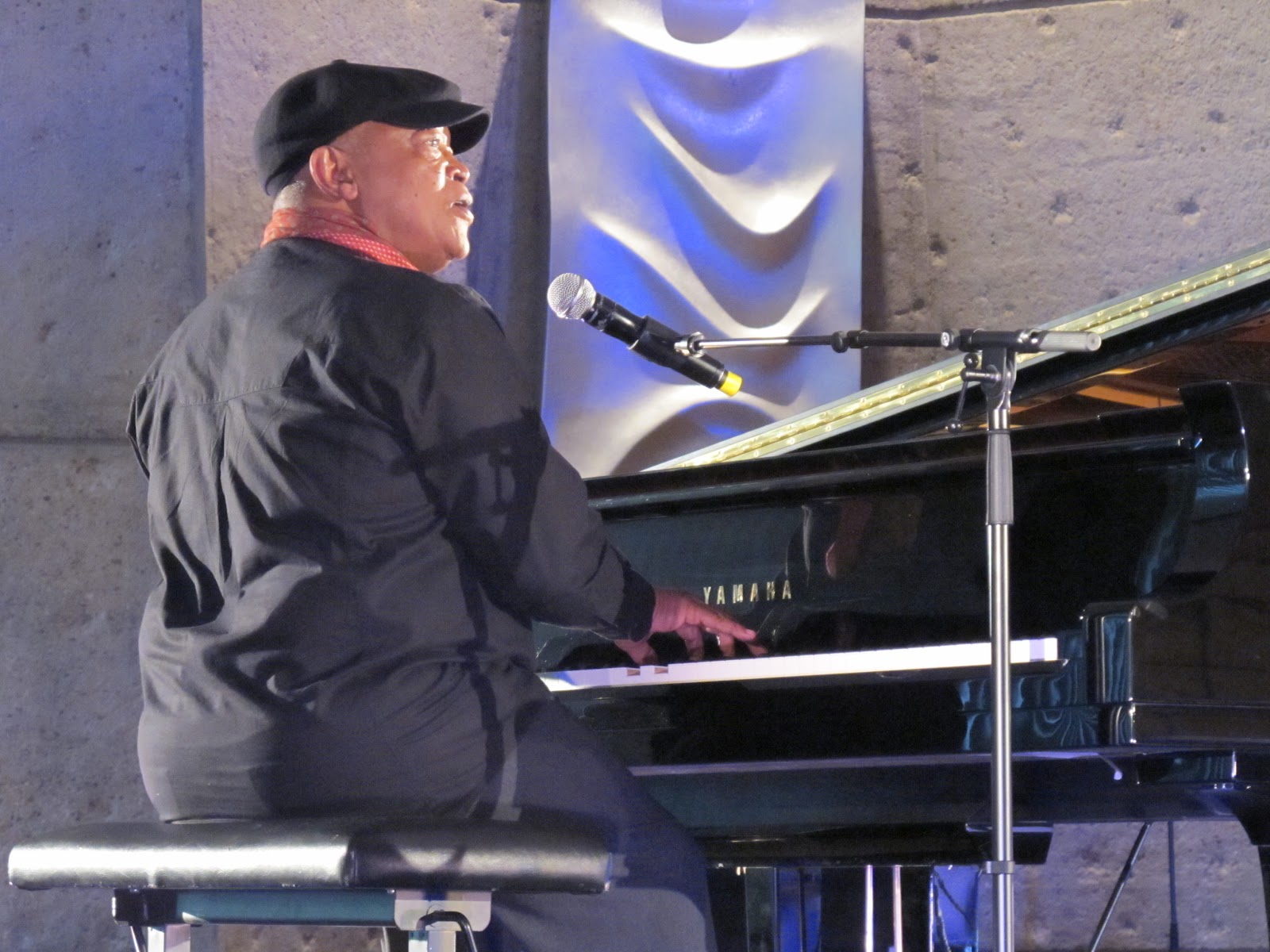
South African musician Hugh Masekela (photo: McKenzie)
PARIS - Hugh Masekela teaching an audience how to sing a South African song. Herbie Hancock reminiscing about how he came to compose “Watermelon Man”, one of his most famous hits. Gospel-jazz singer Nicole Slack Jones rocking the house with her version of “God Bless the Child”. George Benson getting everyone to stand up and dance to a thumping “On Broadway”.

It was a music fest like no other in Paris yesterday, as renowned jazz musicians and their fans flocked to the city to celebrate the first International Jazz Day, which from now on will be marked annually on April 30.

Festivities began in the morning at the headquarters of the United Nations’ cultural agency, UNESCO, and continued late into the night. The musicians gave master classes, discussed the history of the genre and its impact, and performed to a worldwide audience via Internet streaming.

“What we’re celebrating is dialogue, tolerance and the exchange of ideas,” Hancock told SWAN at a post-concert reception hosted by the U.S. ambassador to UNESCO David Killion.

“Jazz brings people together. It’s a music for peace, for opening minds,” he added.

Giving jazz its own day has long been a dream of the legendary pianist. When he was appointed a UNESCO Goodwill Ambassador last July, Hancock proposed the idea to the organization, and UNESCO’s governing bodies adopted it unanimously.

The banner at UNESCO headquarters
“We’re absolutely proud of this day,” said UNESCO’s director-general Irina Bokova. “Throughout its history, jazz has been an engine for positive social change and it is still playing that role.

“Jazz has meant so much to our multicultural society, and this kind of recognition will help to take the music even further,” she told SWAN.

Melissa James, a singer-songwriter who travelled to Paris from London for the event, said: “It’s such a fantastic idea to grab a whole load of great artists like Herbie Hancock and Barbara Hendricks and to have them all in this one venue for a day talking about what they do. And it’s free as well!”

A highlight of the morning events was the master classes and interviews with the performers. Masekela, the South African trumpeter and singer, thrilled spectators as he paid homage to the late Miriam Makeba and taught the audience how to sing a traditional song about healing.

“We’re singing this song to try to heal some of the sickness of the human race,” he said to applause.
Masekela checks out the audience.
(Photo: McKenzie)
Masekela told SWAN that he didn’t care much for specially designated days. “The issues that have to do with the betterment of life for human beings should be every day,” he said, adding however that any tribute to jazz and to African musicians had to be appreciated.

Masekela himself produced a musical tribute to Makeba in South Africa last month (see SWAN article below). “I don’t think anyone has done more for Africa than Makeba,” he said. “She sacrificed a very lucrative career to dedicate her life to the freedom of African peoples.”

Coincidentally, Friday also saw the commemoration of apartheid’s end in South Africa, and this was being cheered even as Masekela spoke.

Herbie Hancock talks about jazz
Hancock, recalling the origins of "Watermelon Man", said he based the composition on a part of the African-American experience in which a watermelon man would pass through the neighbourhood. The wheels of the vendor’s truck would create a certain rhythm, which Hancock tried to portray in music.

He wrote the song 50 years ago, “sometime in April or May of 1962”, and since then it has been recorded more than 200 times by various artists.

Friday’s talks also included a spirited discussion of “Jazz as a Voice of Liberty – It’s Role in the Struggle for Democracy” as experts looked at how musicians used their art to push for change during the civil rights and other eras.

Regarding jazz and film, French director Bernard Tavernier was there for the screening of “Round Midnight”, and Claude Nobs, the founder of the Montreux Jazz Festival, presented a video of the late Nina Simone in a 1976 concert at the festival. Fabien Ruiz, choreographer for the award-winning film “The Artist”, gave a jazz and dance demonstration that viewers enjoyed.

Then there was the concert in the evening, organized by UNESCO and the Thelonious Monk Institute of Jazz. The global cast of musicians performed as if they fully appreciated how historic an occasion this was. Tania Maria, the Brazilian diva, sang and played piano in a manic and infectious manner, as her red hair blazed in the lights.

Marcus Miller, the award-winning bassist from New York, did a fusion jam that had echoes of the Middle East. He slapped and pounded the bass in his unique style, causing people to sway in their seats.

Dee Dee Bridgewater and her daughter China Moses
(photo: McKenzie)
Singer Dee Dee Bridgewater and her daughter China Moses added glamour and soaring vocals to the evening, as they performed individually and together. Opera star Barbara Hendricks, for her part, mixed classical music, jazz and blues and probably hit the highest and lowest notes of the evening.

Nicole Slack Jones, hailing from New Orleans, brought a gospel flavour (and the spirit of Billie Holiday) when she performed “God Bless the Child”, a song first recorded in 1941. As she belted out the words, some in the audience waved their arms in the air, moved by her rich, powerful voice.

And true to his political spirit, Masekela reminded the audience that injustice still needed to be fought. The South African musician told a story of poor workers travelling to Johannesburg to work deep in the gold mines. He used his voice and trumpet to recreate the sounds of the train as it transported the men away from their loved ones.

The concert ended on a high note, with Hancock and singer-guitarist George Benson jamming on an extended version of “On Broadway”.  Most of the other musicians joined them on stage, including Terri Lynne Carrington and Manu Katché on drums .

“Get up and dance,” China Moses instructed the audience. Everyone obeyed.

The party now moves to New Orleans for a sunrise concert and to New York for a star-studded evening show at the U.N. General Assembly, both on Monday, April 30. - A.M.

Thursday, 29 March 2012

CAPE TOWN FESTIVAL HONOURS MAKEBA, THIRD WORLD

Third World Band
South Africa’s 13th Cape Town International Jazz Festival takes place this weekend, with more than 40 international and African stars over the two days of March 30 and 31.

One of the highlights will be a musical tribute to the late African singer Miriam Makeba, performed by trumpeter and bandleader Hugh Masekela along with three of South Africa's most acclaimed vocalists - Vusi Mahlasela, Thandiswa Mazwai, and Zolani Mahola. The show, with Masekela as musical director, originally made its debut at the Rio Loco Festival in Toulouse, France, in June 2010, to much acclaim. The performers will cover Makeba classics like “Pata Pata, "Soweto blues", and "Meet me at the river".

Also generating excitement is the appearance of pioneering reggae band Third World from Jamaica. Bunny Rugs, lead singer of the group, said that the musicians were themselves thrilled to be going to the festival.

“Back in the early Eighties, Third World Band was invited to perform in South Africa for a large sum of money, but the band chose humanity over money,” Rugs says. "Third World would rather have reaped the true riches in our hearts and spirit than support the radical racism and segregation of apartheid."

Now almost 30 years later, the band has been invited back to South Africa to represent Jamaica with “obviously far less money” but with “great honour”, Rugs adds.

Third World has been going strong since 1973 and their fans appreciate their commitment to their roots and to “traditional” reggae. But Rugs says the group also appreciates the fans’ dedication.

“We are so looking forward to entertaining our family in the motherland of South Africa during this homecoming,” he  told SWAN.

Others scheduled to perform at the festival include R&B singer James Ingram, former Fugees vocalist Lauryn Hill and jazz pianist Adam Glasser.

Thursday, 8 March 2012

RISING AFRICAN STARS SING FOR WOMEN’S RIGHTS

Bafing Kul in concert in Paris
Not many performers could engage an audience with a song denouncing female circumcision, but Malian reggae singer Bafing Kul managed to achieve this at a concert in Paris this week to celebrate International Women’s Day on March 8.

“Circumcision is mutilation,” he told spectators, urging them to chant along with him at the concert held at UNESCO, the United Nations cultural agency.

"The practice has no cultural relevance,” he added.

Kul and Moroccan soul/jazz singer Oum were the featured performers at the concert, and it was a pity that their show wasn’t more widely publicised because they had an important message about the need to continue defending women’s rights.

According to the World Health Organization, some 140 million girls and women worldwide are currently living with the consequences of female circumcision or genital mutilation.

The practice involves “removing and damaging healthy and normal female genital tissue, and hence interferes with the natural function of girls' and women's bodies”, WHO says.

Genital mutilation “causes severe pain and has several immediate and long-term health consequences, including difficulties in childbirth also causing dangers to the child,” the organization says.

Art is one way to draw attention to these issues, and Kul seemed at ease with using his music as a “weapon against ignorance and fundamentalism”, as he put it. With infectious rhythms and an energetic stage presence, he presented music that harked back to the best days of reggae, when lyrics had meaning.

Kul might try too hard to channel Bob Marley, but he stands out for trying to tackle serious issues when so many other singers seem content to produce commercial drivel. In Mali, 80 percent of women are affected by genital mutilation, so Kul is breaking with tradition when he condemns the practice. His First album “Yelen” has 11 songs that call for justice, equality and respect for human rights.

Moroccan singer Oum with her band
For her part, Oum entertained the audience with a mixture of funk, jazz and pop. The Casablanca-born vocalist sang in English, French and Arabic, and her pure tone did justice to the different styles of music even if at times she seemed to fuse too many elements.

Oum was at her best when she performed songs that had echoes of traditional Moroccan culture mixed with African beats that made one want to stand up and dance.  She said she was glad to be a voice for her country and for Africa, and to represent women singers who don’t fit any prescribed mould.

Wednesday, 15 February 2012

MARLEY, KIDJO AND K'NAAN CHANT FOR FREEDOM

Jamaican singer Ziggy Marley, Beninese diva Angelique Kidjo and Somalian rapper K’naan are among more than 80 performers on the new Bob Dylan / Amnesty International tribute album that’s climbing up the charts in the United States.

Titled “Chimes of Freedom: The Songs of Bob Dylan Honoring 50 Years of Amnesty International,” the album pays homage both to the American music icon and to the human rights organization for their work since the 1960s.

Marley sings “Blowin’ in the Wind” (see video link below), while Kidjo takes on “Lay, Lady, Lay” and K’naan performs “With God On Our Side”. They join other internationally known artists such as Lenny Kravitz, Adele and Maroon 5 in interpreting 75 of Dylan’s songs. Dylan himself sings “Chimes of Freedom”, which was originally recorded in 1964.

Amnesty International said that all the artists worked voluntarily to support the organization.

“It’s a very important project for us because the contributions from these artists will allow us to reach a wider audience, including all ages,” Geneviève Garrigos, the president of Amnesty International France, told SWAN.

The youngest solo performer on the album is 19-year-old Miley Cyrus (who gained fame with the sit-com Hannah Montana), and the oldest is 92-year-old folk singer Pete Seeger, who recorded “Forever Young” with a children’s chorus.

Created in 1961, Amnesty International has become a global movement, working to free political prisoners and fighting against injustices around the world. In March of 1961 as well, Dylan released his first album and began a career that would have a huge impact on his generation and the music world.

Amnesty International says that with “Chimes of Freedom”, the organization hopes to rally support for its campaign against censorship and attacks on freedom of expression, especially concerning artists, writers, musicians, political activists or bloggers.

The album is available for sale online and in record stores, and an abridged version can be bought at Starbucks cafés. - A.M.

See Ziggy Marley performing here: http://www.youtube.com/watch?v=aoh7FnMYiac

Tuesday, 31 January 2012

HERBIE HANCOCK TEAMS WITH UN TO BOOST CULTURE

Herbie Hancock at UNESCO
PARIS - Herbie Hancock is a musician on a mission.

The jazz legend, who was appointed a UNESCO Goodwill Ambassador last July, says he wants to use his art for the good of humanity.

“In recent years I have become conscious of a different perception of myself in this world which goes beyond being a musician,” Hancock said prior to a special concert in Paris Monday night at the headquarters of UNESCO, the United Nations’ cultural agency.

“That might sound crazy. But I now see myself in terms of my potential value as a human being. In fact I’m more interested in the real value of being a musician … which is to serve humanity,” he told the audience, who had come to see him perform with musical friends Corinne Bailey Rae, Esperanza Spalding, Manu Katché and Stephen Brown.

Hancock’s projects include establishing an international day of jazz, to “promote a month of learning and the celebration of jazz in 195 countries around the world”. (UNESCO has approved this proposal, and the first International Jazz Day will be celebrated globally on April 30, with its official kick-off at UNESCO headquarters on April 27.)

The day will introduce jazz education and appreciation worldwide “as a way to encourage intercultural understanding, dialogue and respect, especially among youth”, the award-winning pianist and composer said.  

His concert in Paris celebrated the 40th anniversary of the World Heritage Convention, which was drawn up in 1972 to protect cultural and natural heritage. So far, 188 countries have ratified the agreement, and 936 properties have been inscribed on the World Heritage List. These include iconic structures such as India’s Taj Mahal, Cambodia’s Angkor temples and the United Kingdom’s Tower of London.

Esperanza Spalding performs with Hancock
But also included are national parks, archaeological sites, and historic town centres such as Camaguey in Cuba, Bruges in Belgium and Timbuktu in Mali.  The famed “pirate city” of Port Royal in Jamaica will soon be a candidate for the list as well.

Hancock has proposed that the locations where blues and jazz began be inscribed on the World Heritage List too: “from farms in the Mississippi Delta to New Orleans to Chicago to New York”. And he would like to see jazz music engraved on another UNESCO list (the Intangible Heritage List) alongside already recognized cultural contributions like French gastronomy.

UNESCO experts say that the protection and promotion of World Heritage sites can create jobs and give an economic boost to countries, and they have designated sustainable development as the theme of the anniversary celebrations taking place globally throughout 2012.

“The World Heritage sites have indeed contributed to sustainable and economic development but this is little known,” Kishore Rao, director of UNESCO’s World Heritage Centre, told SWAN in an interview.

“People think that these are just iconic sites, but they generate jobs, they generate revenue and they promote tourism,” he added.

Despite the inclusion on the World Heritage List of a growing number of sites from less developed regions of the world and the progress made in strengthening the Convention’s policies and practices, “much remains to be done to ensure a full representation on the List of the world’s outstanding natural and cultural diversity”, UNESCO says.

Corinne Bailey Rae and Esperanza Spalding
“The most formidable challenge that the Convention will have to face over the coming years are related to global phenomena such as population explosion, diminishing financial resources and climate change,”  the organisation says. “These are responsible for a wide range of environmental and socio-economic pressures that pose a serious threat to World Heritage properties.”

For his part, Hancock said that when he recently visited some of the sites, he’d had an “eye-opening, incredibly inspiring and uplifting experience”.

“In Cambodia, I became aware not only of the beauty and the importance of World Heritage sites - it was the extent to which the establishment of this site impacted the local community, the city and the entire country by fostering tourism which has a very positive effect on the revenues of the country,”  Hancock said

He added that the places were also significant for “passing down the history of a people” and for “providing a record” of traditions that might otherwise have been lost because of wars and other calamities.

Hancock’s speech was rousing, but it was his music that hundreds of Parisian residents and UNESCO staffers had come to hear. And he didn’t disappoint. He played fresh and funky versions of his famous compositions “Cantaloupe Island” and “Watermelon Man”, cruised beautifully on “River” with Bailey Rae and accompanied Spalding on a special song she had composed for the evening.

That song, which featured Bailey Rae and Spalding doing a clapping, “patty cake” routine, drew the loudest applause of the evening. The two young women, looking like sisters on stage, showed that jazz, art and culture are alive and well, despite what Hancock called this “rapidly changing world”. - A.M.

Thursday, 12 January 2012

COMIC BOOK GIVES HAITI’S VIEW OF THE QUAKE

"Tents Beyond Tents" by P. Jerome and C. Pierre
Two years after the earthquake in Haiti, journalists and cartoonists have come together to produce a comic book that gives the Haitian perspective of the devastating event and its consequences.

The first chapter in this 75-page "comics journalism project" is being published today. It focuses on daily life in Haiti and the survivors’ battle to recover from the deaths of loved ones and the destruction of livelihood and property since Jan. 12, 2010.

Launched by Cartoon Movement, an international publishing platform for editorial cartoons and comics journalism,  the venture emphasizes that the Haitian viewpoint  is important, against the backdrop of often skewed international reporting.
“There is not a lot of media attention any more in Haiti, but there are still so many problems that remain, and we thought it was very important for Haitian people to tell their own story,” said Tjeerd Royaards, a Dutch cartoonist who is a member of Cartoon Movement’s editorial team.
“We also wanted to do this project because we believe that comics journalism and using graphic images to convey a story and a message is a really powerful way to shed some light in a different manner on important issues,” he told SWAN.
In July of 2011, Royaards and U.S cartoonist Matt Bors spent a month in Haiti searching for a cartoonist and a team of journalists to produce a long-running series of non-fiction comics that would delve into the issues facing the country. The initial result is “Tents Beyond Tents”, a first chapter describing life in the tent camps that still dominate much of Port-au-Prince. Some half a million people still live in temporary shelters despite the many pledges of aid.
The story is by Pharés Jerome, a reporter for the Haitian newspaper Le Nouvelliste, and subsequent chapters will be done by other journalists within their areas of expertise.
Cartoon Movement’s editors say that in addition to telling Haiti's story through comics, the organization is “one of the rare outlets” providing Haitian journalists access to an international audience.
“Most of the news about Haiti is through the eyes of Western journalists,” said Royaards. “It makes a difference when people tell things from their own perspective and this is what this project wants to do.”
The entire series will be drawn by Chevelin Pierre,  considered one of the most  talented comic artists working in Haiti. He says that the project is an opportunity to express his frustrations. and those of his countrymen.
Comics journalism “lends itself perfectly to the subject” of venting unhappiness with the current situation, according to Pierre.
Cartoon Movement said it will keep a spotlight on Haiti after the anniversary of the earthquake has passed, publishing multiple pieces in 2012 that will focus on such issues as Haitian politics, the role of NGO's, and "what exactly happened with all the relief money that came flooding in after the disaster". The comics will be published in English, French, and Creole.
Royaards told SWAN that the editors will try to find a publisher to produce the book in hard cover, and that all proceeds will go to the Haitian writers and artists taking part. - A.M.
For more information:  http://www.cartoonmovement.com/comic/29

And for an article (by O. Snaije) about a renewed Haitian literary festival, see: http://publishingperspectives.com/2012/01/reborn-haiti-lit-fest-promises-post-quake-reading-revival/